.svg)



10 Best Consumer Insights Tools for Teams in 2026

A useful consumer insight rarely comes from one dataset alone. You usually need a mix of direct feedback, audience research, market signals, and behavioral data to understand what customers want, what shapes their choices, and where they get stuck.
Consumer insights tools help you collect, organize, and analyze that information so it can support clearer decisions in marketing, product, and research.
In this article, we break down the platforms that support direct research, audience intelligence, social listening, product testing, and reporting so you can choose the right fit for your workflow.
TL;DR
These are the best consumer insights tools worth trying in 2026:
- Compeers AI
- Google Analytics
- Contentsquare
- Google Trends
- Mixpanel
- Sprout Social
- Zendesk
- Kissmetrics
- Brandwatch Consumer Research
- Zappi
10 Best Consumer Insights Tools
Consumer insights tools help you understand what people do, what they want, what frustrates them, and what influences their decisions.
They do that by pulling together different kinds of evidence, such as survey responses, customer feedback, qualitative research, audience data, behavioral analytics, and signals from digital channels.
A team may need customer feedback surveys to hear direct reactions, user behavior data to see how users interact with a site or product, social listening to track customer sentiment and brand mentions, and market research to understand the wider target audience and the trends shaping demand.
In practical terms, consumer insights tools can help your team work with:
- Survey data from direct customer research
- Qualitative insights from interviews, open-ended responses, and feedback polls
- Behavioral data from websites, apps, and other digital channels
- Audience intelligence that shows preferences, habits, and customer behavior
- Social listening data from customer conversations, social media platforms, and online mentions
A customer insights platform, or consumer intelligence platform, is useful when it helps your team collect customer insights, connect those inputs, and turn them into actionable insights a business can use.
For market researchers, product teams, and brand teams, the goal is to gain actionable insights, improve customer satisfaction, and produce valuable market insights that support better decisions.
The tools in this list do that in different ways, so the right fit depends on whether your team needs direct research, audience understanding, online conversation analysis, product testing, or a tighter path from data collection to action.
1. Compeers AI
Compeers AI gives you one connected system for direct market research, analysis, and reporting. It's an AI-assisted, all-in-one insights platform for project design, data collection, analysis, and reporting, with modular support for qualitative, quantitative, and ad hoc work in the same environment.
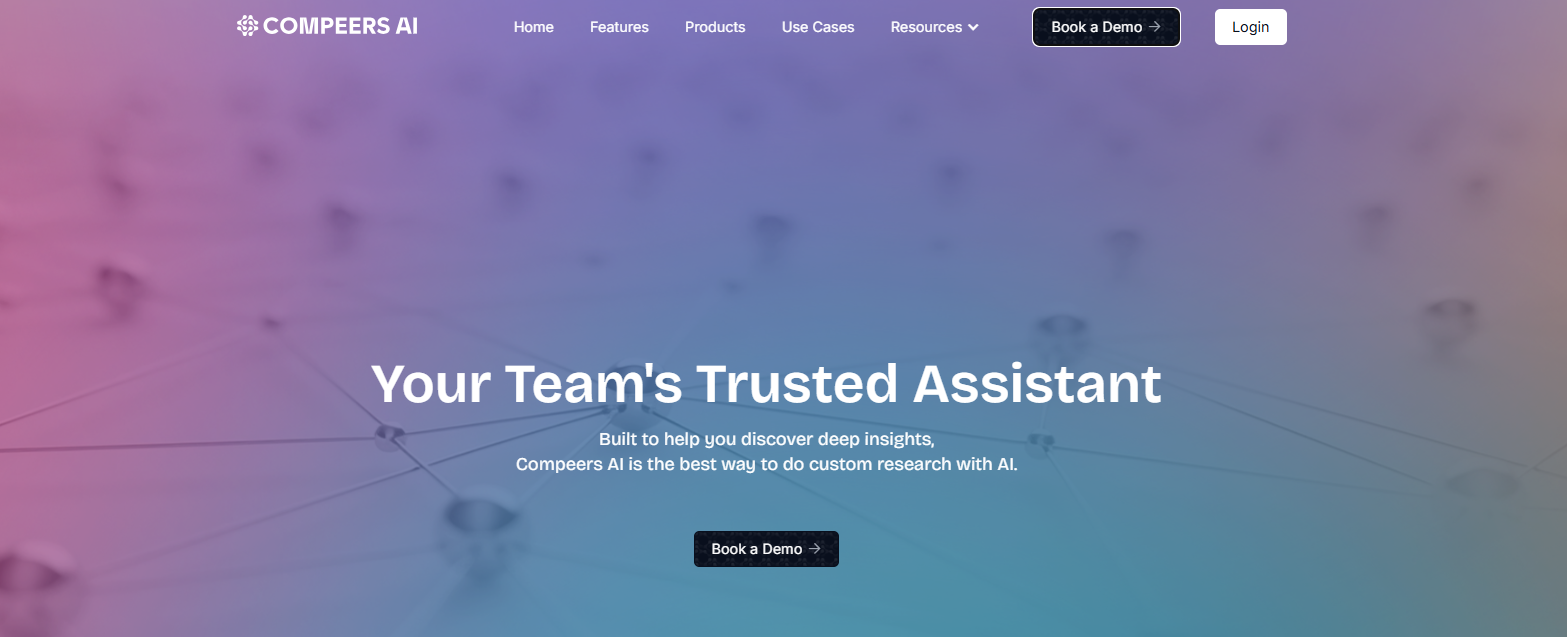
Compeers AI keeps the brief, questionnaire, discussion guide, data analysis, and first-draft output tied to the same research workflow, so your team can move from evidence to narrative without rebuilding the project in a new file.
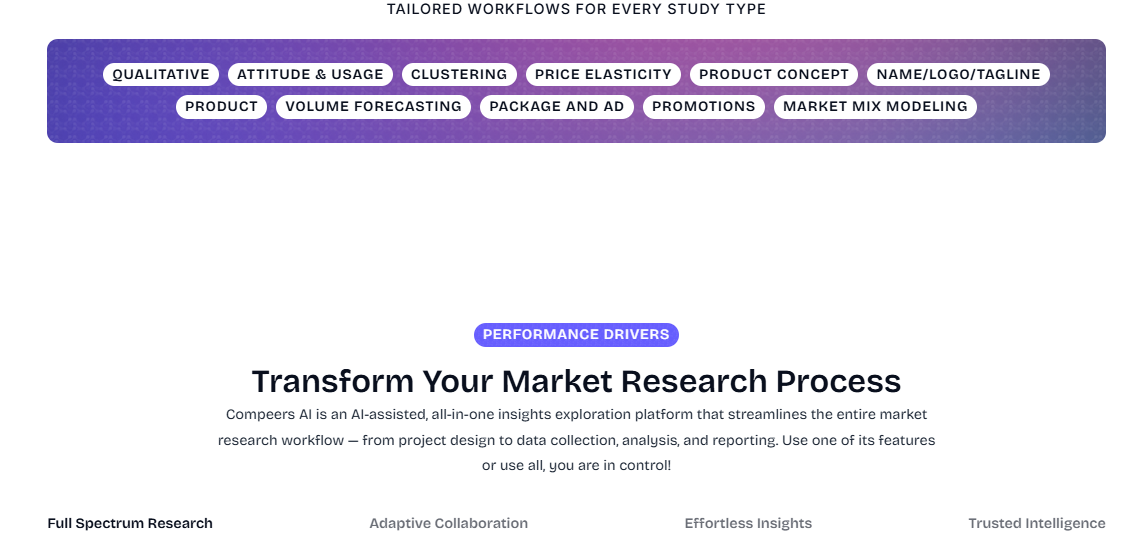
The product depth is built around the jobs consumer insight teams actually run.
- Qualitative Compeer is designed for in-depth interviews, focus groups, and ethnographies.
- Quantitative Compeer is engineered for survey research and advanced analytics.
- Short Responses Compeer helps with rapid open-ended analysis.
- Rapid Concept Evaluation Compeer supports AI-powered concept testing.
- Savant serves as an AI data analyst for exploration, visualization, and first-pass insight generation.
- Segmentation Compeer applies factor analysis and multiple segmentation models to quickly identify audience groups.
Key Features
- Guided workflows for qualitative and quantitative custom studies
- Questionnaire and discussion guide creation in one system
- Automated cross-tabs, advanced analytics, and first-draft reporting
- Multi-language transcription, translation, and qualitative data FAQs
- Secure, traceable outputs with centralized project management
How Compeers AI Supports Consumer Insights
Your team can scope research projects, build questionnaires or discussion guides, collect data, run advanced analytics, and generate editable deliverables without moving between separate systems at each stage.
The system supports thematic coding and narrative development for open-ended responses, advanced analytics including segmentation, key driver, conjoint, and pricing research, and auditability and transparency to help you trust how outputs are produced.
Compeers AI centralizes feedback, commentary, and final reports in one shared workspace, while Savant helps you explore data, compare patterns, and surface evidence for reporting.
Book a demo and see how Compeers AI keeps consumer research, analysis, and reporting connected!
2. Google Analytics
Google Analytics is a web and app analytics tool that shows how people find, use, and return to a digital property.
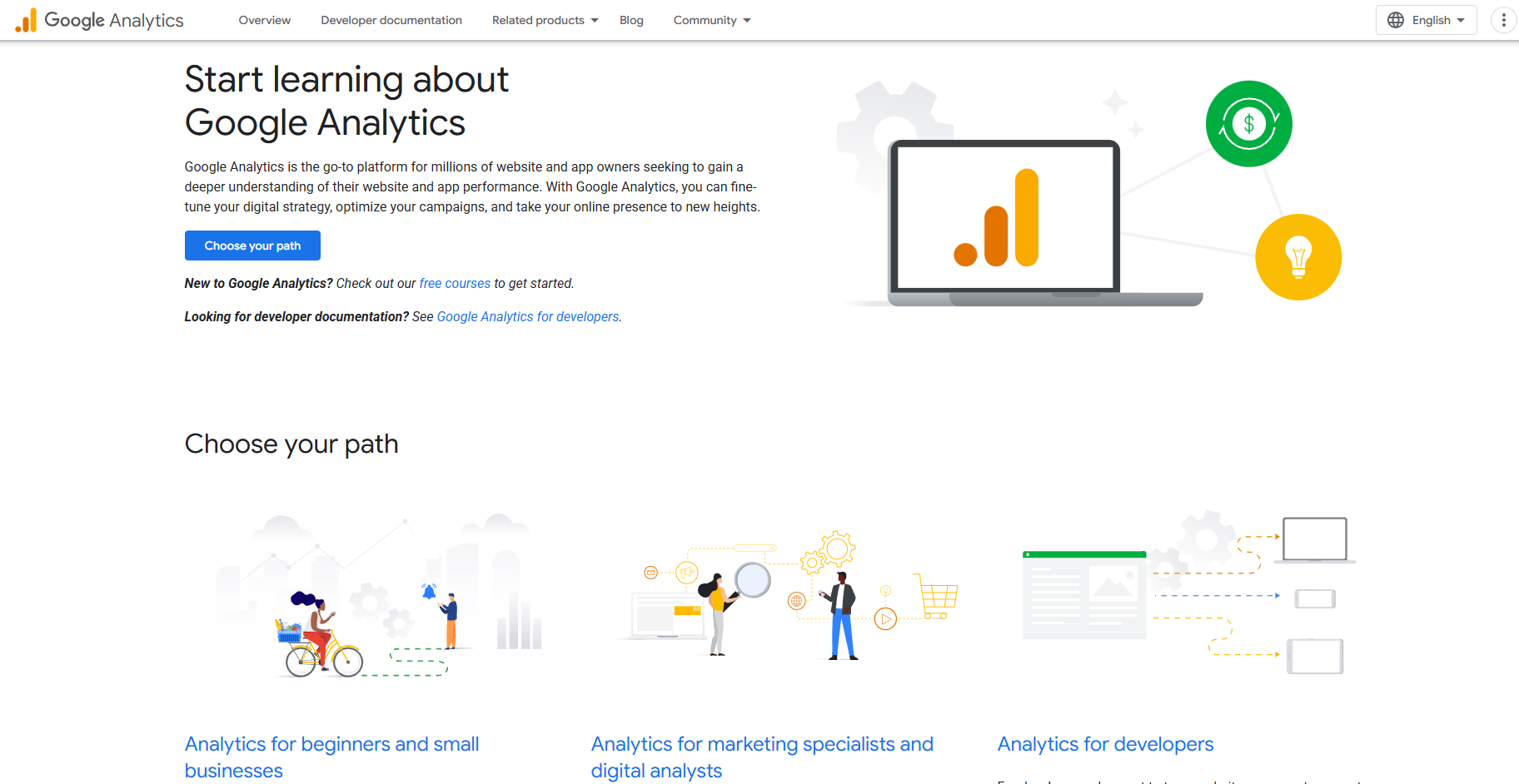
Your team can use it to track traffic sources, page engagement, events, conversions, and retention, which makes it useful for customer insights tied to digital performance.
It works especially well when you need to connect marketing campaigns, website behavior, and customer journey data before deciding what to improve next.
Key Features
- Acquisition reports for traffic sources and campaign performance
- Engagement reports for pages, screens, events, and user actions
- Life cycle reporting from acquisition through retention
How Google Analytics Supports Consumer Insights
You can use Google Analytics to see which channels bring people to your site and how those visitors behave after they arrive. That helps your team understand whether social media, search, email, paid campaigns, or referral traffic attract the right audience.
Engagement reports show which pages people view, which events they trigger, and where users drop before taking action. Those signals help you spot weak landing pages, confusing journeys, and content that doesn't match customer needs.
The Life cycle collection also helps you segment customer data by region, device, traffic source, or behavior. Your team can use those cuts to compare user interactions and make better decisions about website copy, UX changes, and campaign priorities.
3. Contentsquare
Contentsquare is an experience intelligence platform for understanding how users experience a website, app, or digital product.
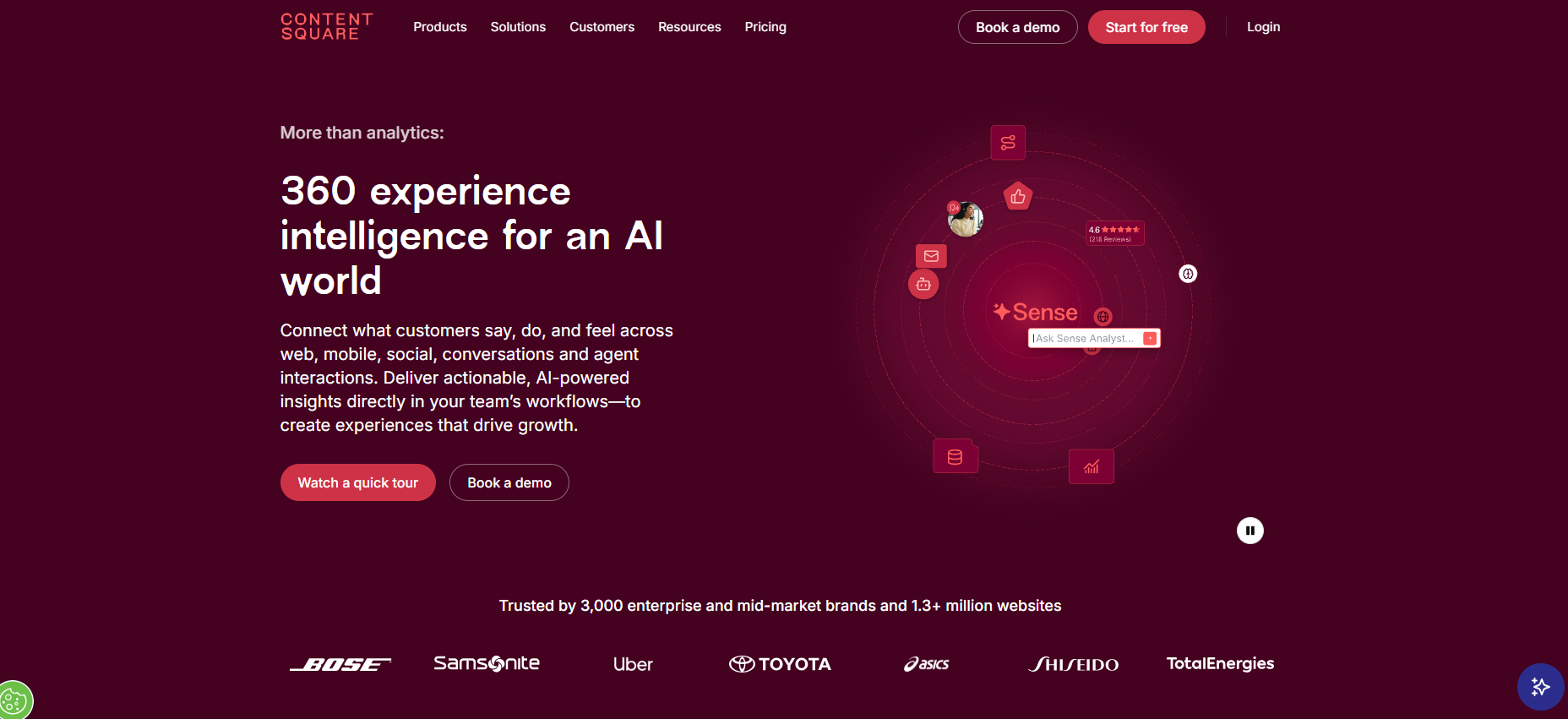
Its product set includes Experience Analytics, Product Analytics, Voice of Customer, Conversation Intelligence, Experience Monitoring, heatmaps, journey analysis, and session replay.
Your team can use Contentsquare to see where people struggle, why users abandon key pages, and which digital experience issues hurt conversion or customer satisfaction.
Key Features
- Session replay and heatmaps for behavior review
- Journey analysis for web, app, and mobile paths
- Voice of Customer tools for direct feedback collection
How Contentsquare Supports Consumer Insights
Product Analytics connects clicks, journeys, frustration, and outcomes, so you can see where the customer experience breaks down rather than stopping at page-level metrics.
Session replay helps you watch the exact path a customer took before leaving, converting, or getting stuck. When you combine replays with heatmaps and journey analysis, you can find the friction points that affect checkout, onboarding, product discovery, or form completion.
Voice of Customer and Conversation Intelligence add more context to the behavioral picture. Your team can collect feedback, review customer interactions, and use those signals to prioritize issues affecting conversion, customer satisfaction, and the customer experience.
4. Google Trends
Google Trends is a free search intelligence tool that shows what people search for on Google, how interest changes over time, and where demand is rising by region.
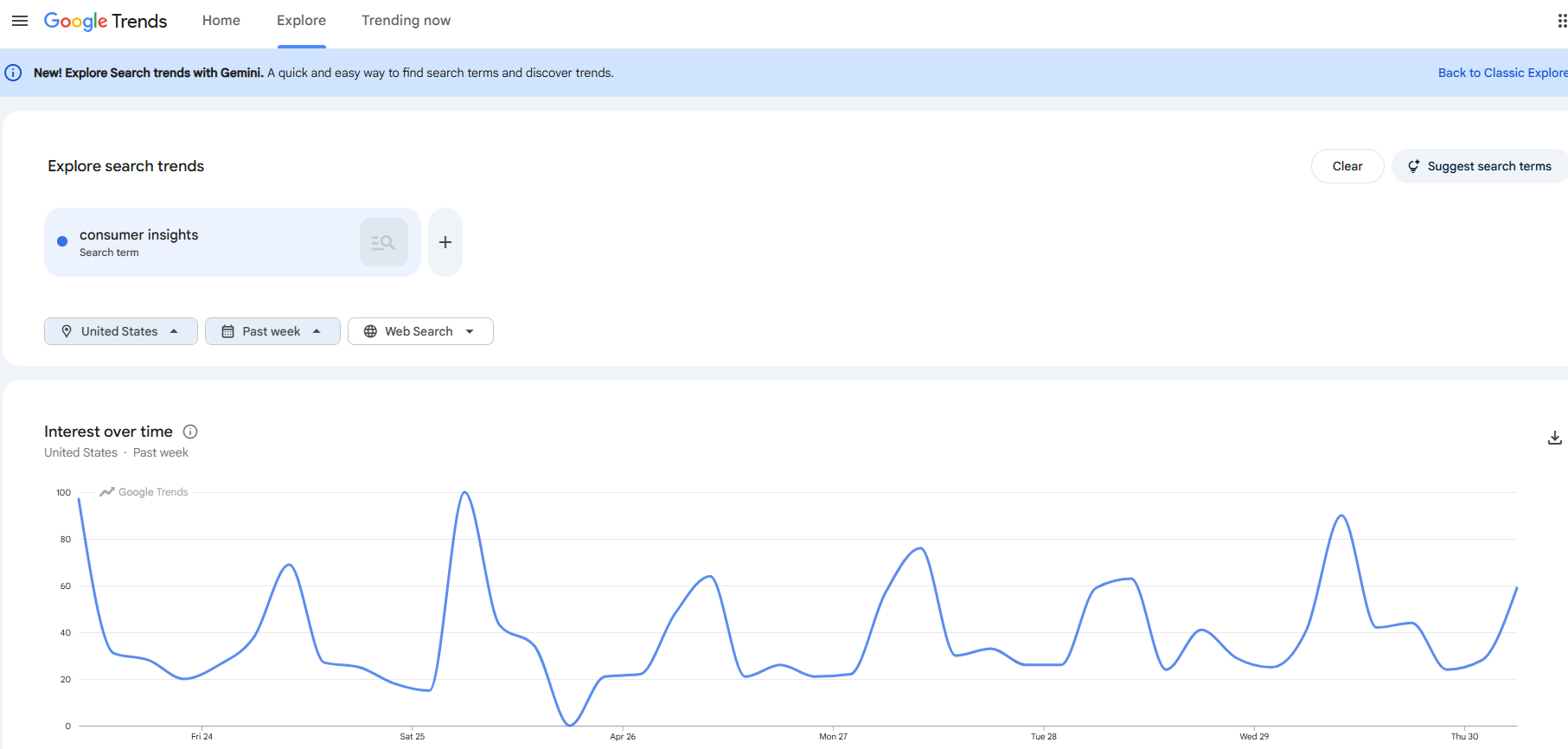
It's valuable for consumer insight work because search behavior often reveals early demand, purchase intent, seasonal interest, and emerging trends before they appear in sales data.
You can compare up to five search terms or topics, review related queries, and see regional interest to shape content, campaign timing, and market positioning.
Key Features
- Search interest trends by time, region, and topic
- Related topics and related queries for discovery
- Regional maps showing where terms are most popular
How Google Trends Supports Consumer Insights
You can use Google Trends to spot changes in search demand before they show up in other customer insights tools. A rising topic may signal a new pain point, seasonal need, purchase trigger, or market shift your team should address.
The comparison view helps you understand which keyword, product category, or customer problem is gaining more attention. That is useful when your team needs to choose campaign angles, content topics, product positioning, or messaging based on real search behavior.
Regional interest data adds another layer of consumer insight. If a term is rising in one market but flat in another, your team can adjust local campaigns, landing pages, or inventory planning to focus on where demand is strongest.
5. Mixpanel
Mixpanel is a product analytics tool for understanding how users interact with a product, where they convert, and what keeps them coming back.
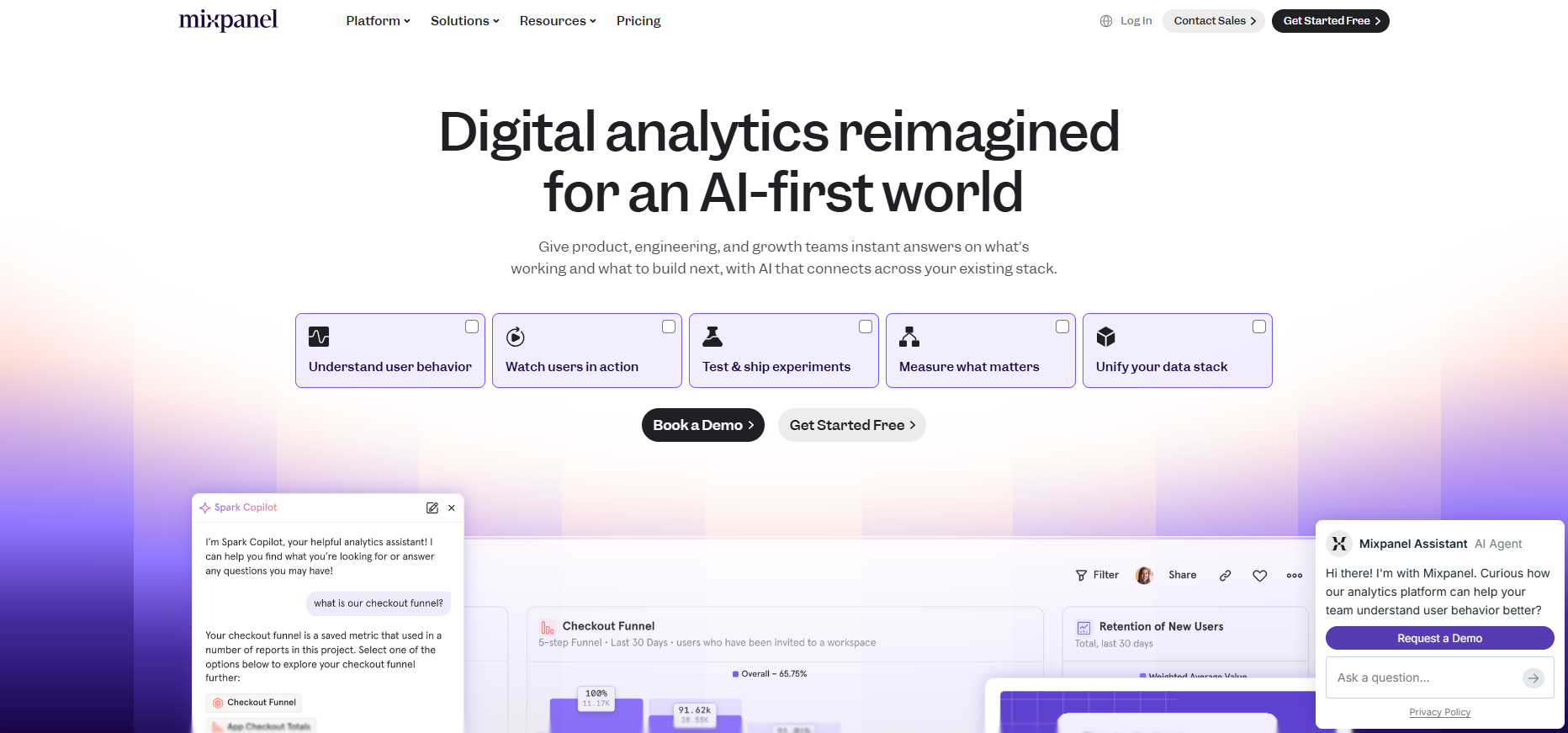
It gives product, growth, and marketing teams reports on funnels, flows, retention, cohorts, and insights, making it useful when customer insights depend on event-level behavior rather than broad web traffic.
Mixpanel is especially relevant for SaaS, apps, and digital products that need to study product adoption, feature use, conversion steps, and retention patterns by segment or cohort.
Key Features
- Funnels for conversion paths and drop-off analysis
- Retention reports for engagement over time
- Breakdowns by cohort, property, or user segment
How Mixpanel Supports Consumer Insights
Funnel reports show how people move through conversion paths, where they drop, and how user properties or behaviors affect completion rates.
Retention reports help your team see whether users return after their first session, purchase, or feature interaction. That's useful when you need to understand product stickiness, customer engagement, and the behaviors linked to long-term use.
Breakdowns lets you segment behavior by plan, persona, device, campaign, account type, or other properties your team tracks. Those segments help you see which groups behave differently and where product improvements may have the largest impact.
6. Sprout Social
Sprout Social is a social media management and social listening tool for tracking brand conversations, social engagement, sentiment, and emerging topics.
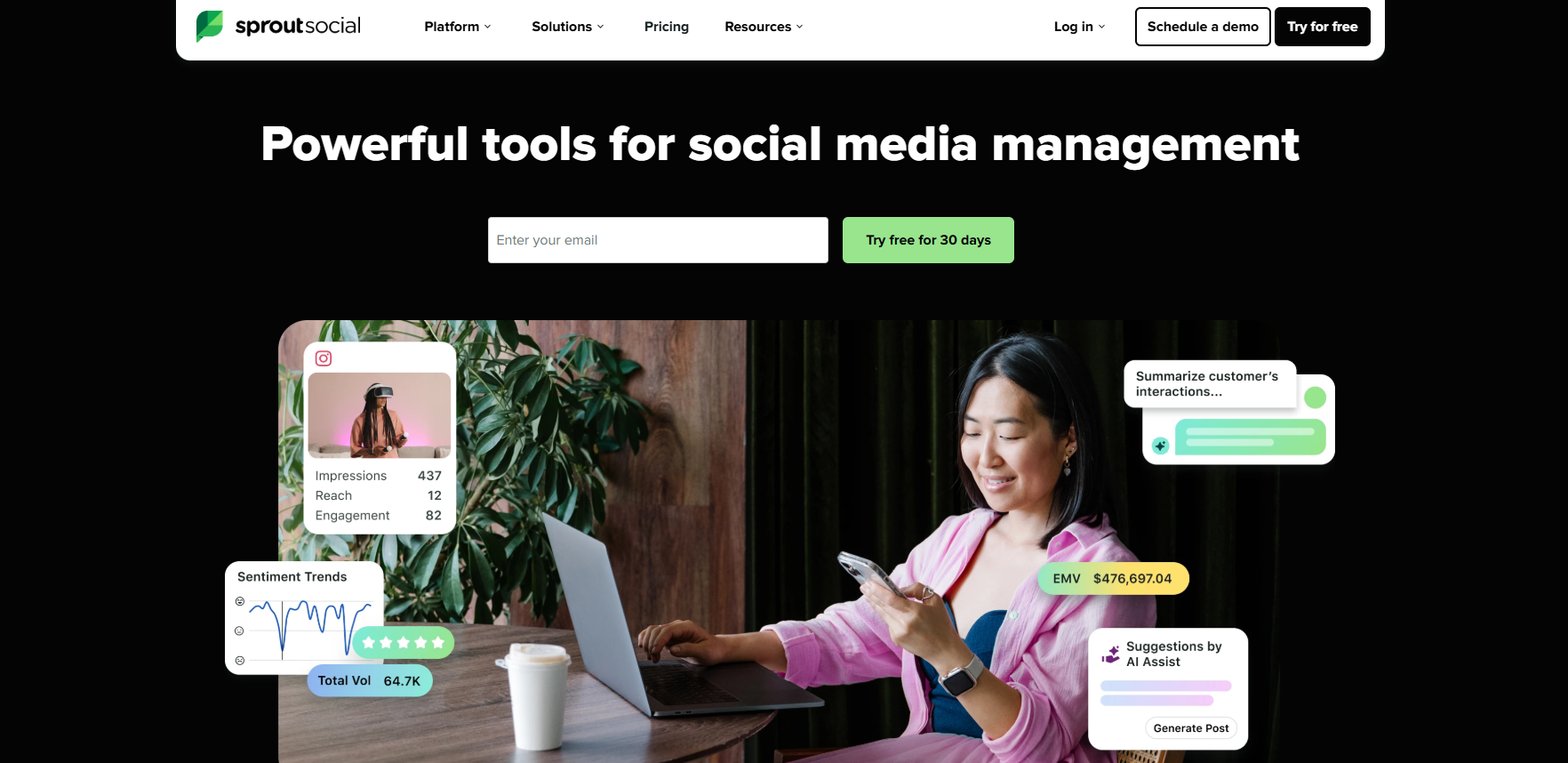
It's useful for consumer insight work because customers often share opinions, complaints, product reactions, and brand expectations on social media before they appear in formal research.
Sprout’s Listening product tracks keywords, hashtags, brands, industries, and multimedia content from Facebook, X, Instagram, LinkedIn Mentions, Reddit, YouTube, and the web.
Key Features
- Social listening for keywords, hashtags, brands, and industries
- Sentiment and trend analysis from social conversation data
- Social engagement, publishing, analytics, and reporting tools
How Sprout Social Supports Consumer Insights
Listening data helps you track brand mentions, customer sentiment, and changes in engagement around launches, campaigns, or product updates.
Comments, complaints, and questions can inform customer success, product feedback, social content, and marketing campaigns before small issues become major customer-experience problems.
Sentiment analysis gives more context than volume alone. Your team can use it to understand how people feel about brand performance, marketing campaigns, product launches, and customer experience, then adjust messaging or service responses based on the conversation.
7. Zendesk
Zendesk is a customer service platform that turns customer conversations from email, chat, messaging, social channels, and support workflows into organized service data.
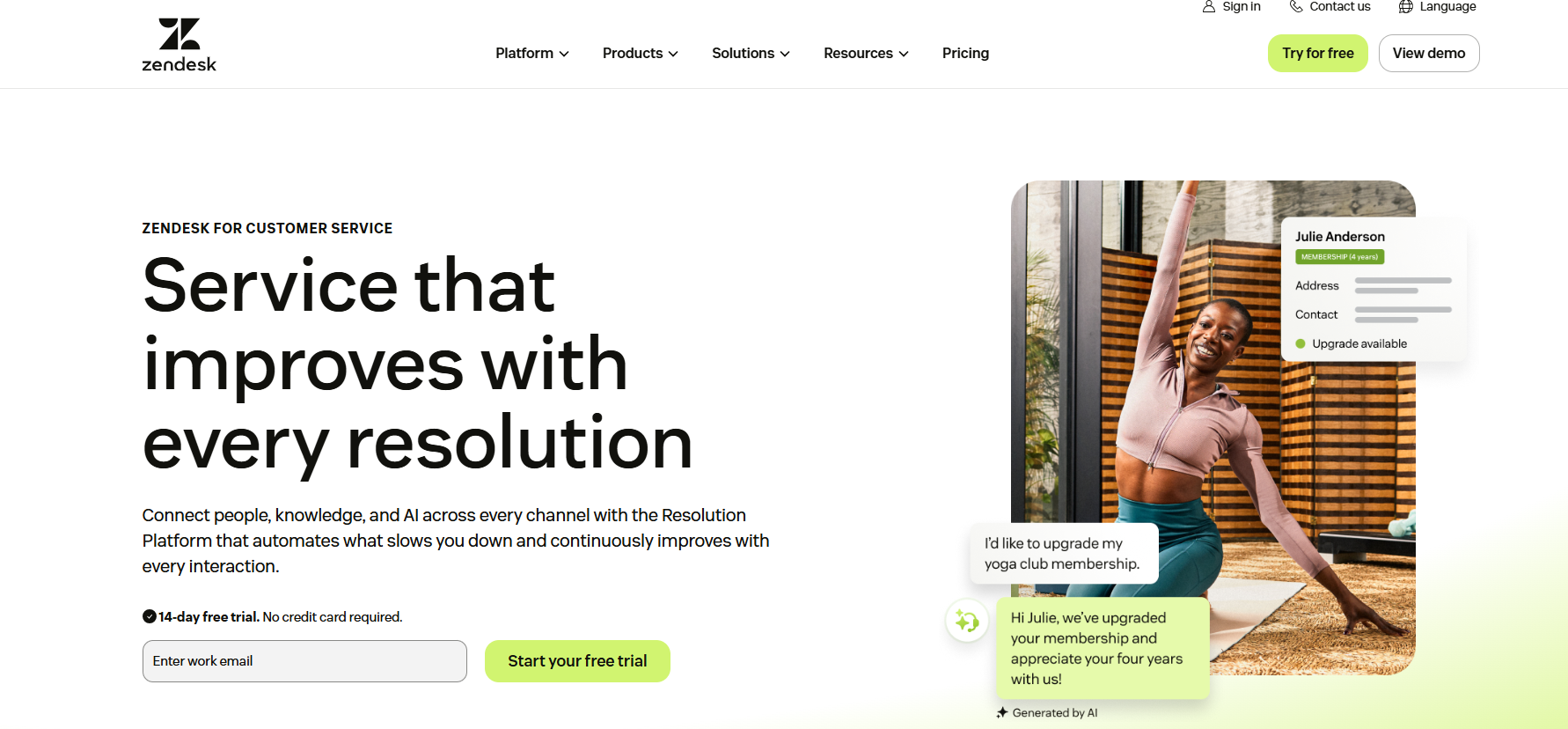
It gives you a structured way to manage tickets, track recurring issues, monitor customer satisfaction, and understand what customers ask for before those issues reach product or marketing teams.
Zendesk supports consumer insight work because support conversations often reveal unmet needs, product confusion, service gaps, and pain points that surveys may miss.
Key Features
- Omnichannel messaging through web, mobile, and social channels
- Unified workspace for conversations, channels, and customer data
- AI-powered analytics for customer and operational data
How Zendesk Supports Consumer Insights
Zendesk helps your team collect customer insights from support interactions that already happen every day. Tickets, chats, and messages reveal what customers struggle with, what they ask repeatedly, and where the customer experience creates friction.
Tagging and categorization make those conversations easier to analyze. Your team can group requests by product area, customer type, issue, or journey stage, then use the patterns to improve help content, onboarding, and product experience.
Zendesk’s analytics layer gives you visibility into key service and operational metrics, including live monitoring, automation potential, and predictive insights. Those signals help your team connect customer conversations to customer satisfaction, support load, and product improvement work.
8. Kissmetrics
Kissmetrics is a person-level behavioral analytics tool built to track individual users, complete customer journeys, revenue attribution, and conversion behavior. It focuses on how people move from first touch to signup, purchase, repeat purchase, or churn.
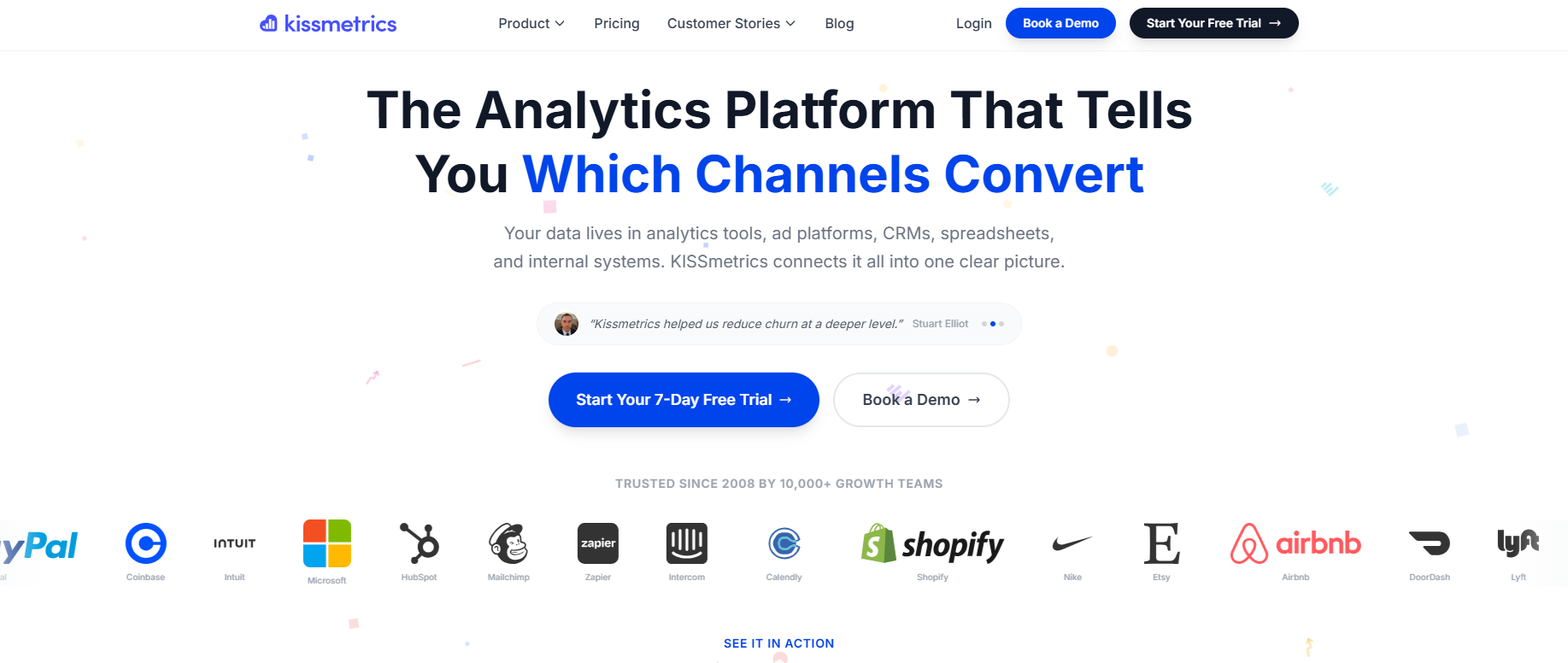
Kissmetrics connects user behavior to revenue, customer lifetime value, funnels, cohorts, and behavioral campaigns instead of stopping at anonymous pageview data.
Key Features
- Person-level tracking through devices, sessions, and journeys
- Funnel, cohort, revenue, and behavioral report types
- Revenue attribution by channel, campaign, and user segment
How Kissmetrics Supports Consumer Insights
Kissmetrics helps you understand the journey of a real person, not only a session or device. It can show you the path a customer takes from first ad click to conversion, how behavior changes between sessions, and which actions lead to higher-value outcomes.
Funnel reports show where users continue, where they drop off, and which steps disrupt conversion. That helps your team improve onboarding, checkout, trial conversion, feature adoption, and other customer journey moments where small changes can affect revenue.
Revenue reporting connects customer behavior to actual dollars, including channels, campaigns, user segments, paying customers, and lifetime value. That gives your team a clearer view of which customers are most valuable and which behaviors deserve more attention.
9. Brandwatch Consumer Research
Brandwatch Consumer Research pulls consumer insight from public online conversations on a very large scale.
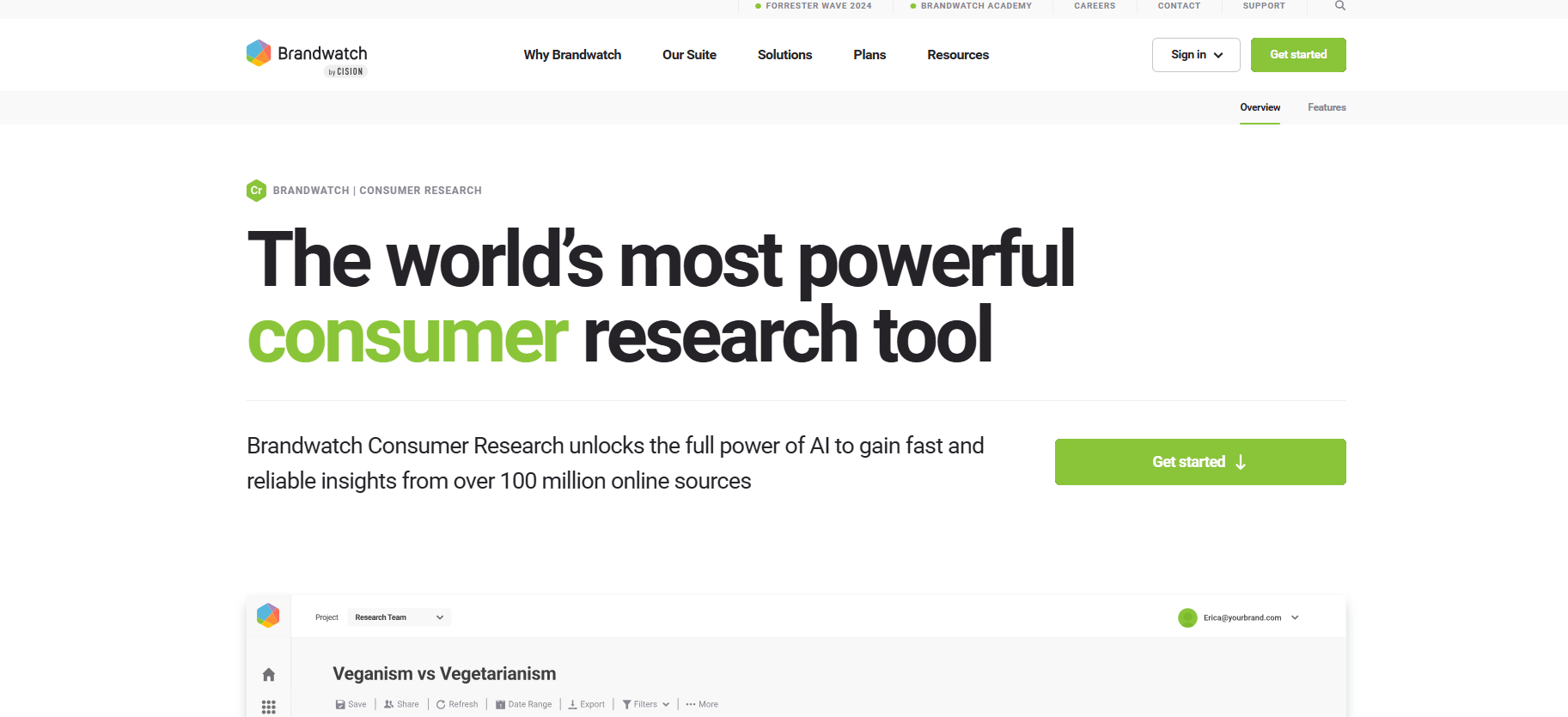
You get access to a large archive of consumer opinions from social networks, blogs, forums, news sites, review sites, video sites, and regional sources, making it relevant when customer sentiment, brand perception, and trend analysis matter more than a fresh survey.
Consumer Research includes 1.4+ trillion posts going back to 2008 and adds hundreds of millions of new public posts every day. It also supports first-party uploads such as surveys, support tickets, and call logs, so you can compare public customer conversations with your owned customer data.
Key Features
- AI-powered search over 1.4+ trillion posts
- First-party data uploads for surveys, support tickets, and call logs
- Sentiment and key topic analysis in 44 languages
How Brandwatch Consumer Research Supports Consumer Insights
Its AI-powered search, rules, categories, tags, and unlimited segmentation options make it possible to track brand mentions, compare topics side-by-side, and break discussions into business-relevant views such as product lines, regions, or pain points.
Brandwatch includes dashboards, topic clouds, demographics, entity detection, image analysis, sentiment classification, influencer discovery, historical benchmarking, and signals that alert you when conversation volume, sentiment, or customer engagement shifts unexpectedly.
You can export data to Excel, CSV, JPG, PNG, PDF, PowerPoint, or API outputs. You can also share live views through Vizia and send email alerts to stakeholders without requiring logins, making it easier to move customer intelligence into customer success, brand, communications, and executive reporting.
10. Zappi
Zappi keeps consumer feedback tied to innovation, advertising, and brand work through one continuous testing loop.
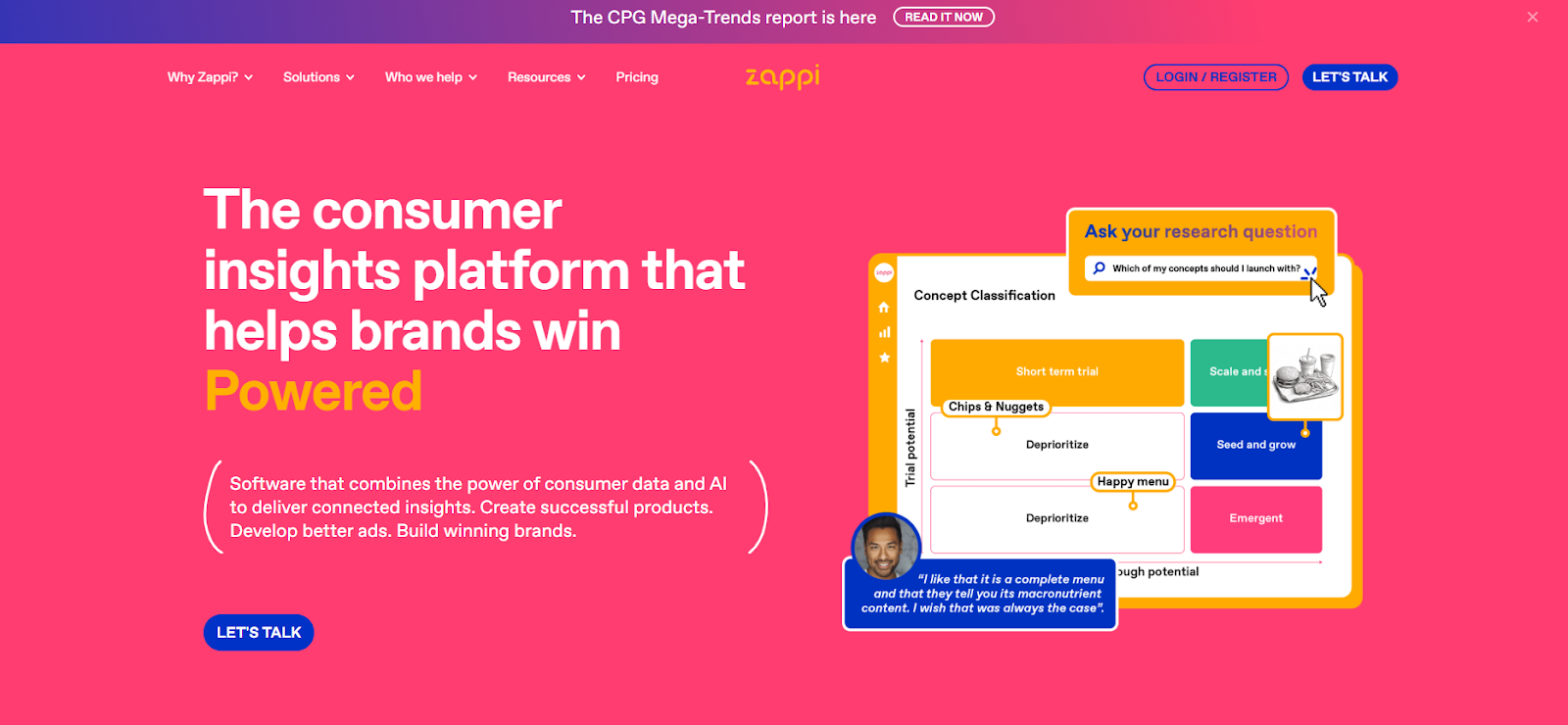
The product keeps consumer input connected to product concepts, creative, and brand decisions rather than letting each project end as a one-off reporting deck.
Instead of giving you a broad customer-insights platform for every possible job, Zappi goes deep through repeated consumer testing and guidance that can feed marketing campaigns, brand tracking, and product development decisions.
Key Features
- Integrated innovation, advertising, and brand insights in one product
- AI-accelerated continuous feedback loop through the development cycle
- In-depth diagnostics and precise guidance backed by ESOMAR and ISO standards
How Zappi Supports Consumer Insights
Each project builds on past insight, so you can collect customer reactions, test product concepts, review advertising, and use that evidence to guide the next creative or innovation decision with more continuity.
Zappi goes deeper on diagnostic feedback for innovation and campaign research. You can use that detail to assess brand performance, test launch readiness, and refine concepts or messaging before moving forward.
The platform also puts more weight on response quality. You'll get cleaner inputs and more confidence that the findings can support business decisions rather than another cycle of basic feedback.
Turn Consumer Insights Into a Connected Research Workflow
Consumer insight work slows down when the evidence is scattered. Survey data may sit in one system, audience intelligence in another, customer feedback surveys somewhere else, and the final reporting deck may no longer show how the recommendation connects to the actual research process.
Compeers AI brings those steps into one connected workflow.
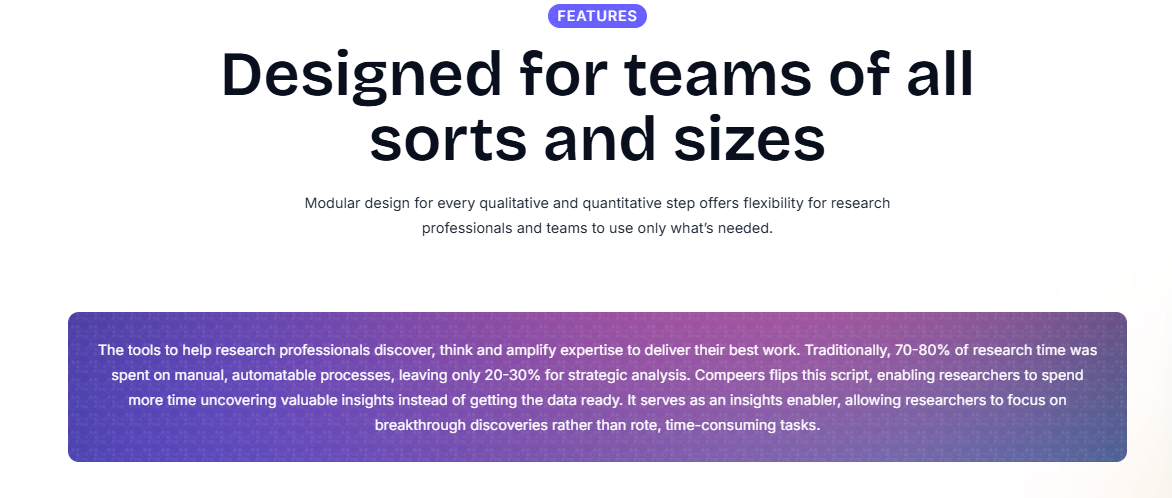
Your team can design the study, collect direct feedback, conduct quantitative and qualitative research, analyze the data, and build a first-draft report without breaking the project into separate stages.
Customer needs, customer interactions, open-ended responses, concept testing, segmentation, and supporting analysis stay tied to the same project, so the final readout reflects the full logic of the study instead of a stitched-together summary.
You'll spend less time chasing files, rebuilding charts, and checking which version of the analysis is current, and more time explaining what the findings mean, what the data supports, and what the business should do next.
Book a demo and see how Compeers AI connects consumer research in one workflow!
FAQs About Consumer Insights Tools
What are consumer insights tools?
Consumer insights tools are systems that help your team collect, organize, and interpret evidence about what customers do, think, and need. They can include customer insights tools for primary research, a consumer intelligence platform for audience data, or social listening tools for analyzing public conversations.
Can one consumer insights tool cover every research need?
Usually not. One product may cover direct research and reporting, while another is better for behavioral analytics, social media management, or social listening on public platforms.
What should you compare before choosing a consumer insights tool?
You should compare the data source, research methods, data analysis speed, and whether the product helps them turn findings into actionable insights. You should also look at workflow fit, custom pricing, and whether the tool supports the target audience's work, brand questions, or customer experience problems you need to solve next.
How do brands combine different consumer insights tools effectively?
Brands usually combine direct research with audience data, social media monitoring, and behavioral data from digital channels. A practical setup might pair a customer insights platform with Google Analytics to see where users drop, then add social listening or brand-mention tracking to understand the customer journey, customer engagement, and brand perception behind those signals.
Latest articles
Browse all posts

.svg)
Custom research, reimagined
.svg)
.svg)
.svg)
.svg)