.svg)



8 Best Customer Insights Software Tools in 2026

Teams already have more customer data than they can easily use. The bigger issue is that feedback, behavior, and service signals are often spread across too many systems, which makes it harder to spot patterns, understand what customers need, and act before the moment passes.
Customer insights software helps teams bring that work together, so they can move from scattered inputs to clearer decisions with less manual effort.
We’ve reviewed eight customer insights software tools that help teams organize feedback, connect signals across the journey, and turn customer data into action.
TL;DR
These are the best customer insights software tools for 2026:
- Compeers AI
- Suzy
- Quantilope
- Observe.AI
- InMoment
- Verint
- Zappi
- Tableau
What Is Customer Insights Software?
Customer insights software enables teams to capture, connect, and analyze customer data to better understand customer behavior, sentiment, and needs.
It brings together signals from customer interactions, survey feedback, service tools, social media platforms, web activity, and other data sources, so teams can analyze data and support decision-making with clearer evidence.
The right analytics tool depends on the workflow you need to support, the existing systems you already use, and whether your team needs deeper insights from qualitative data, quantitative signals, or both.
8 Best Customer Insights Software of 2026
Customer insights software now covers several adjacent categories, from market research and voice of customer to conversation intelligence and analytics tools.
The eight tools below all help teams gain insights from customer data, but they do it in different ways across the customer journey.
1. Compeers AI
Customer insight work gets messy fast when surveys live in one tool, interviews in another, and analysis happens across spreadsheets, decks, and manual handoffs.
Compeers AI brings that work into one connected system, so your team can move from research setup to final output without rebuilding the story at each stage.
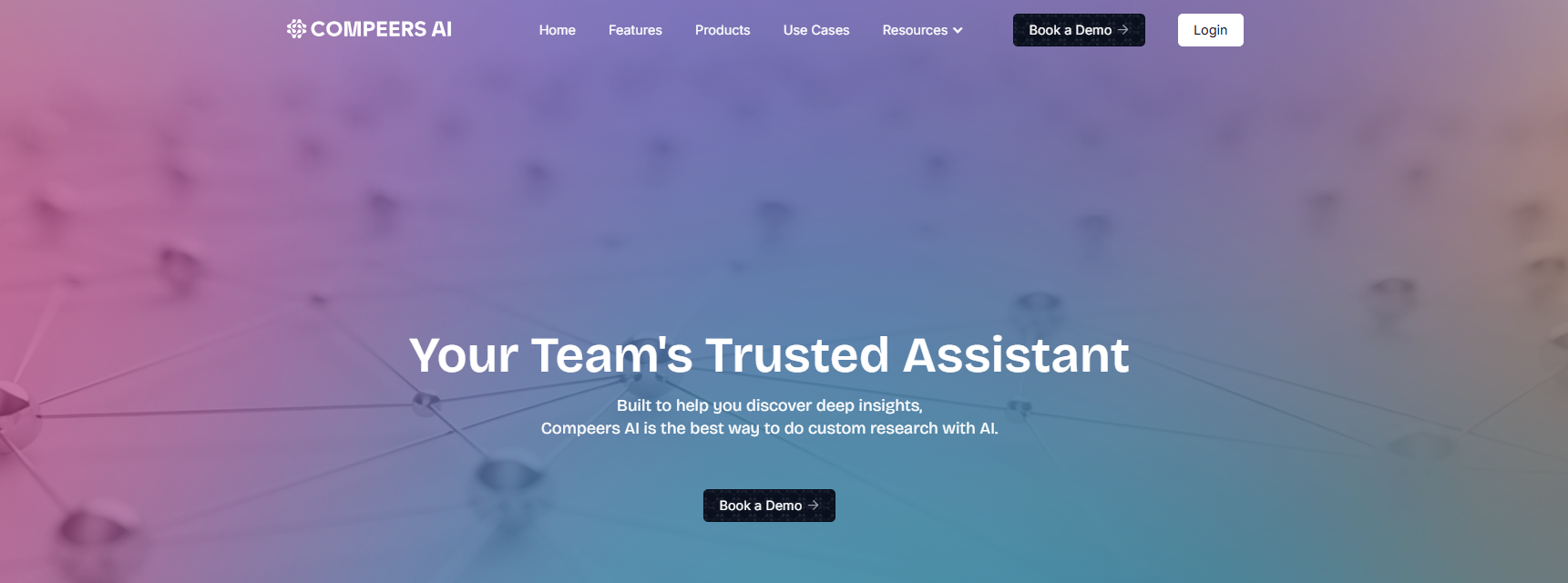
It covers the tasks insights teams actually need to get done:
- Qualitative Compeer for discussion guides, interviews, transcription, translation, coding, and qualitative analysis
- Quantitative Compeer for questionnaire design, survey programming, data cleaning, cross-tabs, advanced analytics, and first-draft reporting
- Segmentation Compeer for industry-standard factor analysis and multiple segmentation models
- Rapid Concept Evaluation Compeer for top of the funnel concept testing, key driver analysis, and audience segmentation
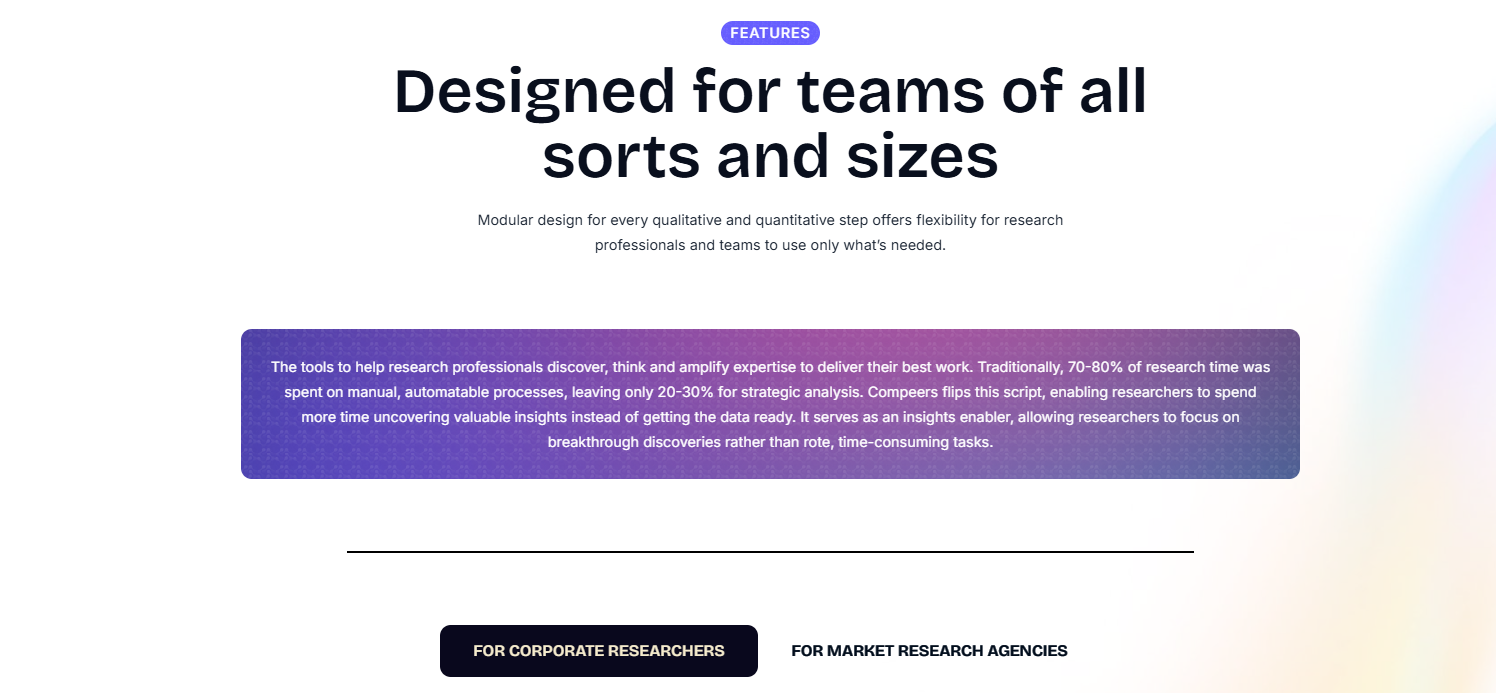
Savant adds a more flexible way to work with findings once the data starts coming in. Your team can ask questions in natural language, explore patterns, compare responses, and pull together evidence across customer feedback, survey results, historical research, and broader market context without losing sight of the source material behind the conclusion.
That makes Compeers AI a strong choice for insights, strategy, and research teams that need customer insights software to do more than report metrics. You can run the work, analyze the signals, and build decision-ready outputs in one place with researcher judgment still guiding the final read.
Security stays close to the workflow, too. Compeers AI includes SOC 2 Type II and ISO/IEC 27001:2022 certifications, which matter when customer data, internal research, and proprietary information require stronger controls.
Standout Features & Unique Capabilities
- Build discussion guides and questionnaires aligned to your research and business objectives.
- Run qualitative and quantitative workflows in one connected research environment.
- Use Savant to query project data, generate visual outputs, and surface customer insights with traceable logic.
Pricing
- Pricing is custom
Book a demo and turn customer feedback into decision-ready insights with less manual work!
2. Suzy
Suzy is a customer insights platform built around faster decision support. The product combines Signals, conversational research, audience access, and shared data tools so teams can move from a business question to an answer without launching a large custom project every time.
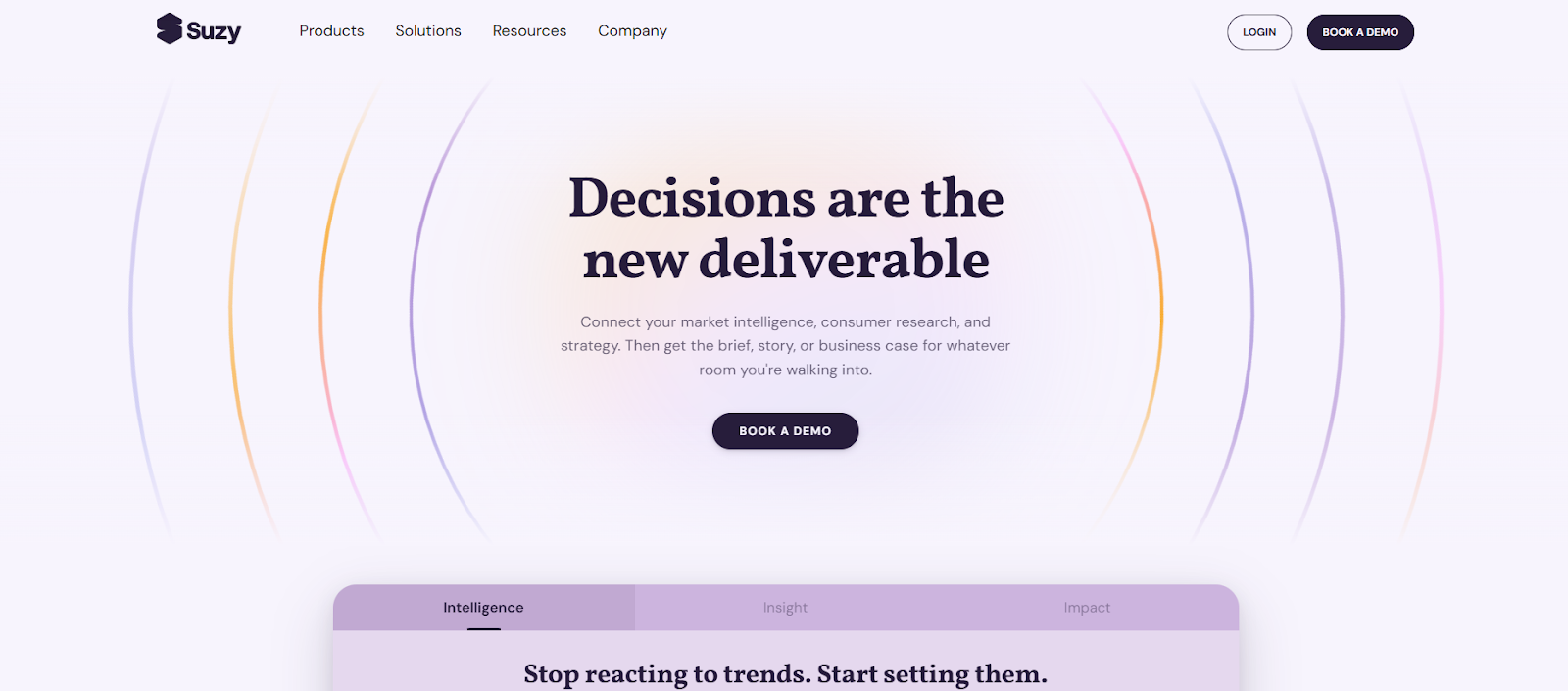
Its current product structure centers on Ask Suzy Chat, Talk to Consumers, Query Data, and Signals, which give teams several ways to explore customer feedback, customer trends, and current market context from a single workspace.
For teams that need customer insights tied closely to marketing campaigns, product questions, customer engagement, and customer experience, Suzy sits earlier and faster in the workflow than a heavier research platform.
The built-in audience network, broad and niche audience options, and BIOTIC fraud detection also make it easier to collect feedback without stitching together multiple systems.
Standout Features & Unique Capabilities
- Ask Suzy Chat, Talk to Consumers, and Query Data support conversational exploration of customer questions.
- Signals adds always-on context from scrolling, sharing, saving, and other user interactions.
- Audience access spans 70+ panels and 130+ international markets, with AI fraud detection built into the workflow.
Pricing
- Free: 25 credits
- Pro: $150/month for 100 credits
- Team: $200/month for 200 credits
- Enterprise: Custom pricing
3. Quantilope
Quantilope is a consumer intelligence platform built around automated quantitative research and advanced methods.
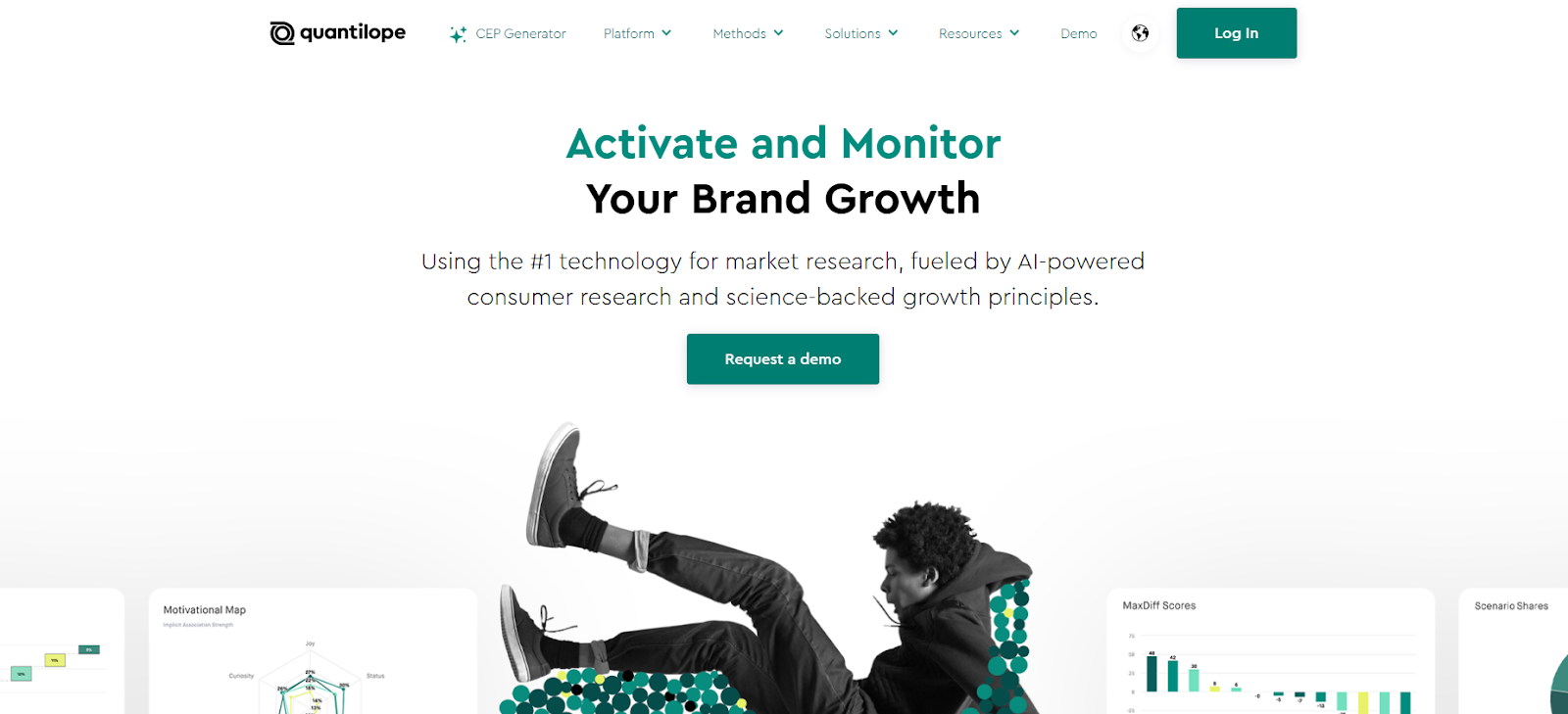
The company positions the product as an end-to-end environment for consumer insights, with automation, machine learning, and its AI co-pilot Quinn built into the research process.
That gives teams access to advanced techniques such as segmentation, pricing, conjoint analysis, and tracking, in a product designed to shorten time to actionable insights.
Quantilope also supports tracking and automated significance testing, which help teams forecast future customer behavior, follow emerging trends, and make more informed decisions using quantitative and historical customer data.
Standout Features & Unique Capabilities
- 15 automated advanced methods support structured customer analytics and research design.
- Quinn supports survey setup, charting, summaries, and end-to-end AI assistance across the workflow.
- Tracking modules update in real time and keep dashboards, reports, and statistical testing current for all users.
Pricing
- Business: Starts at $22,000
- Pro: Custom pricing
- Enterprise: Custom pricing
4. Observe.AI
Observe.AI comes from the contact center side of the customer insights market. Its platform focuses on conversation intelligence, AI agents, real-time guidance, post-interaction analysis, and voice-of-customer insights from service conversations across voice, chat, email, and other digital channels.
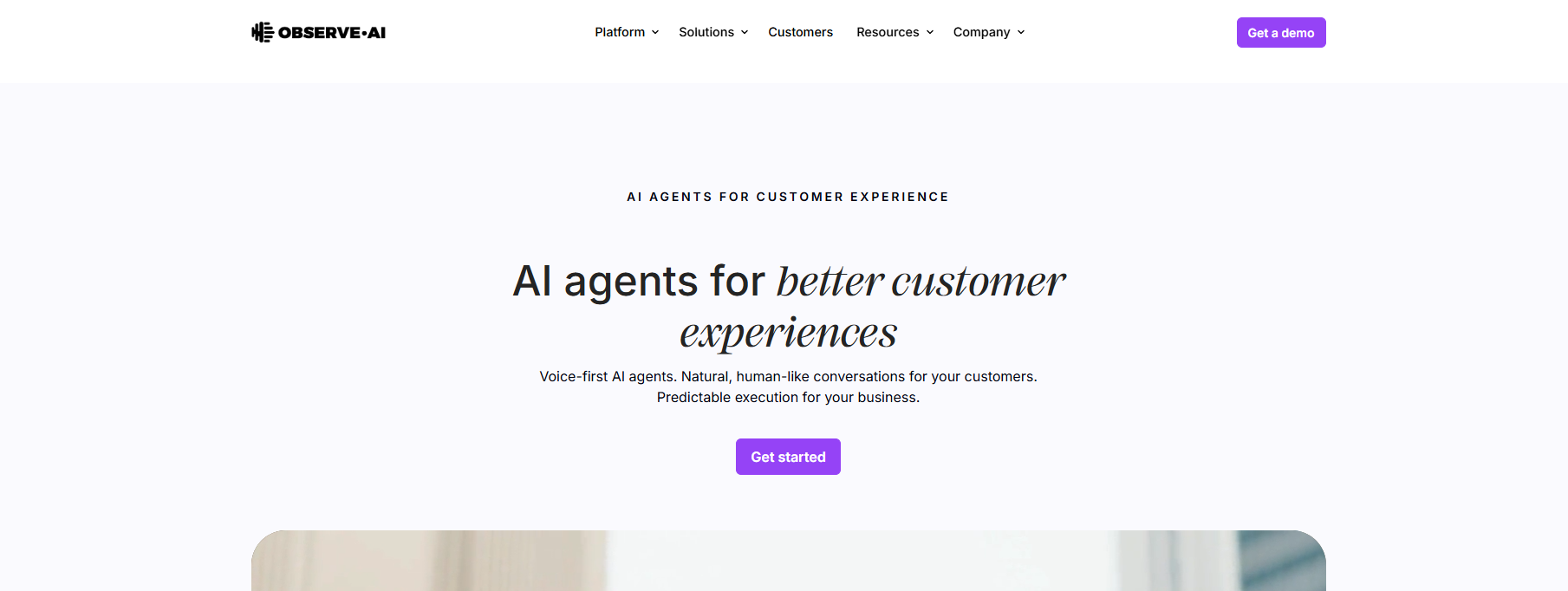
The product analyzes every customer conversation rather than a sample, helping teams monitor inquiries, identify pain points, and respond to sentiment.
Observe.AI suits teams that need customer insights from service operations, especially when customer service data is the primary source of truth.
Contact center and CX leaders can use it to surface product issues, churn risks, service friction, and revenue opportunities from the true voice of the customer.
Standout Features & Unique Capabilities
- GenAI-powered conversation intelligence analyzes voice, chat, and email interactions at scale.
- AI agents surface churn, product issues, and sales performance through chat-based access and out-of-the-box reports.
- Built-in QA, coaching, and workforce workflows connect insights to frontline action.
Pricing
- Custom pricing
5. InMoment
InMoment centers its customer-insights software on improving the customer experience. The XI Platform collects feedback from surveys, contact center interactions, social reviews, web sessions, in-store visits, and media such as images, videos, and audio, then analyzes that data for patterns, anomalies, and opportunities.

The product sits squarely in the voice of the customer and customer experience category, with a strong focus on combining structured and unstructured signals across the customer journey.
For CX teams, InMoment can cover a large share of the workflow from data collection to action. It supports AI survey building, conversational data, text analytics, emotion and sentiment recognition, customer journey mapping, advanced customer segmentation, social listening, and action planning.
That makes it a fit for organizations that need to analyze customer data from multiple channels, identify trends in customer behavior, and connect survey feedback, service data, and digital behavior to business outcomes such as retention and customer satisfaction.
Standout Features & Unique Capabilities
- XI Platform captures experience data from surveys, contact center interactions, social media reviews, web sessions, and store visits.
- Self-serve text analytics, native language understanding, and sentiment recognition help teams analyze qualitative data at scale.
- Advanced customer segmentation and action planning help teams connect insights to experience improvement work.
Pricing
- Custom pricing
6. Verint
Verint approaches customer insights through engagement data, voice of the customer, and enterprise customer experience.
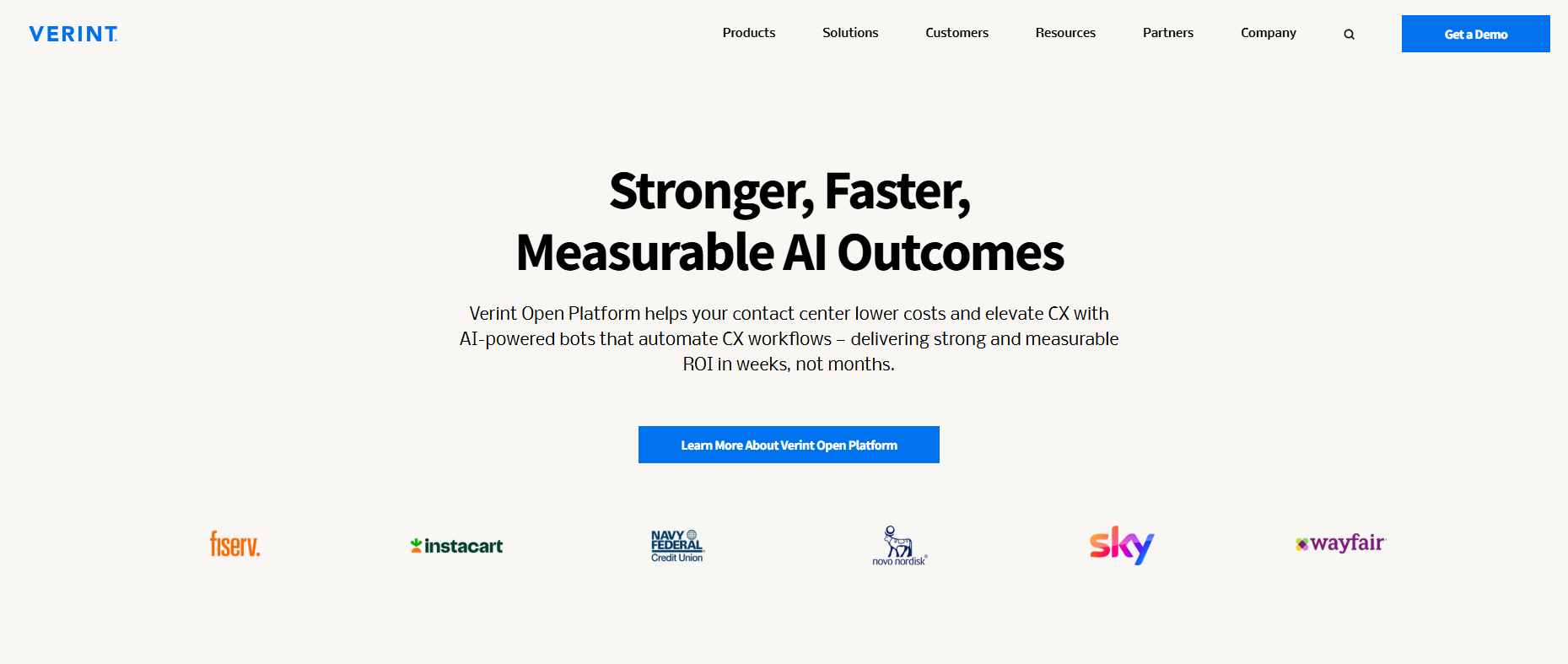
Its Engagement Data Hub sits at the core of the Verint Open Platform and aggregates interaction, experience, and workforce performance data, enabling organizations to analyze a broader set of customer and employee signals from one place.
That includes feedback, transcripts, recordings, performance metrics, and operational data.
This is a suitable fit for enterprise CX and contact center environments rather than for standalone market research.
Teams can use Verint to unify customer data from every touchpoint, connect outside data alongside Verint-native data, and feed richer analytics into customer service, operations, and workforce management.
Standout Features & Unique Capabilities
- Engagement Data Hub unifies interaction, experience, and workforce performance data in one layer.
- The platform can link to or ingest external data, not only data generated within Verint applications.
- Enterprise CX tools connect customer insights to real-time actions across service and loyalty workflows.
Pricing
- Custom pricing
7. Zappi
Zappi is a consumer insights platform built for connected learning in innovation, advertising, and brand work.
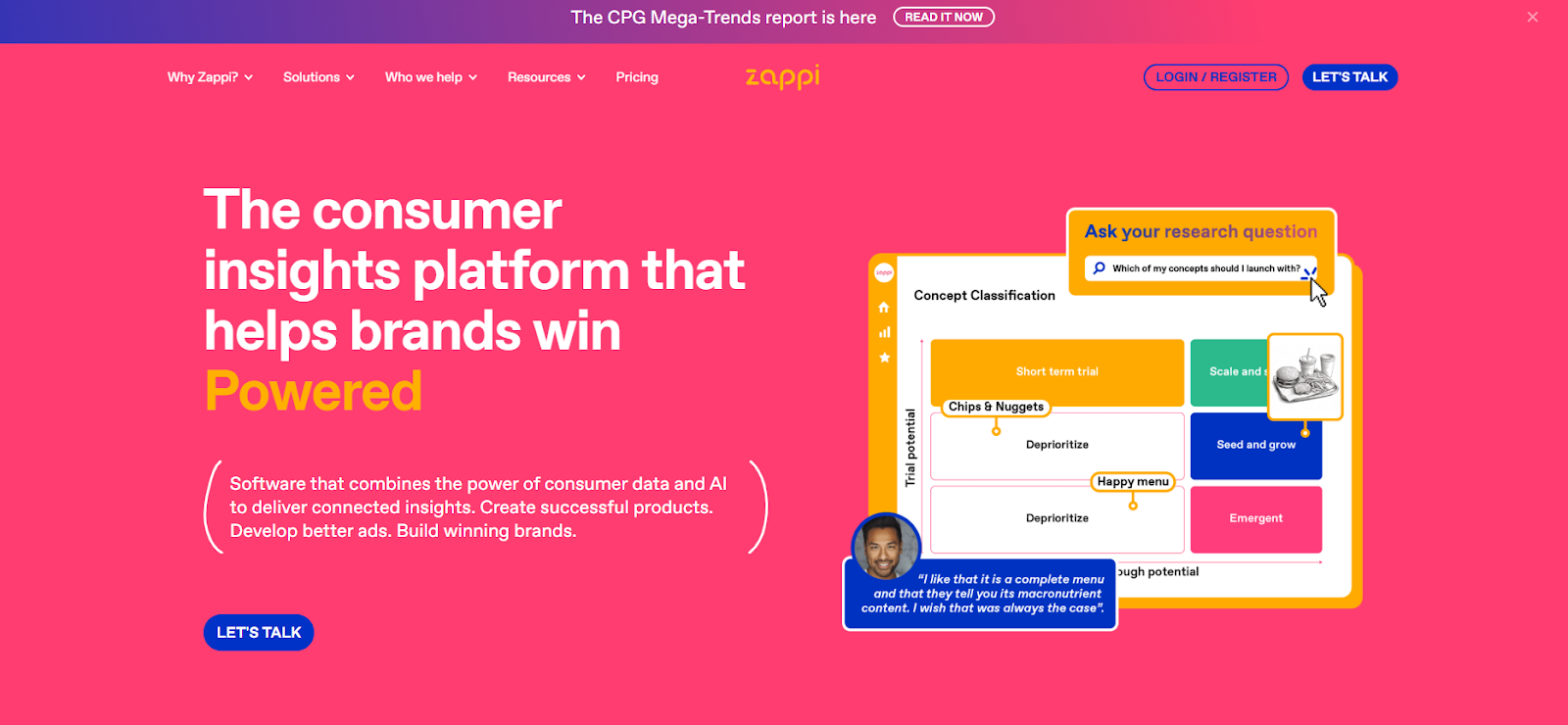
It combines consumer data and AI so brands can test ideas, analyze results, and keep learning from what previous studies already uncovered.
The product is not a classic customer experience suite. It's closer to a research-led insights environment that helps teams make faster business decisions by turning testing and feedback into insights.
Teams can use it to analyze data as responses come in, compare results with benchmarks, and build data-driven insights that support product decisions and brand planning without throwing away historical data after each project.
Standout Features & Unique Capabilities
- One shared workspace holds on-demand research, automated AI-generated reports, and historical learning.
- Smart autocoding, flexible benchmarks, and automatically populated charts speed up analysis and reporting.
- Connected innovation, advertising, and brand systems help teams learn across studies instead of restarting each time.
Pricing
- Premium: Custom pricing
- Enterprise: Custom pricing
8. Tableau
Tableau is not a dedicated customer insights platform like the other tools, but it remains part of many customer insights stacks because it helps teams analyze and visualize data clearly.

The product focuses on dashboards, visual analytics, and broader business intelligence, which makes it a common layer for customer analytics built from CRM data, survey feedback, service logs, Google Analytics exports, and other existing systems.
Tableau Cloud now also includes AI support through the Tableau Agent and related features.
Teams use it after data collection to combine multiple data sources, create detailed data views, and share insights. It helps marketing, product, and service teams understand how customers interact, where user behavior changes, and which business objectives are improving.
It's less suited for direct feedback, but it's still a strong analytics tool for turning customer data into informed decisions and recurring dashboards.
Standout Features & Unique Capabilities
- Tableau Cloud gives teams a fully hosted analytics layer for preparing, analyzing, and sharing customer data.
- Creator, Explorer, and Viewer licenses support different levels of dashboard building and collaboration.
- Free trial options make it easier to test workflows before committing to broader deployment.
Pricing
- Tableau: $15/user/month
- Tableau Enterprise: $35/user/month
- Tableau+ Bundle: Custom pricing
How to Choose Customer Insights Software
What kind of insight work does your team need to support every week?
A platform built for survey feedback and qualitative analysis will not solve the same problems as a system built for behavioral reporting, service workflows, or recurring dashboards.
That's why the shortlist should start with workflow fit, not feature volume.
Match the Software to Your Insight Workflow
The first distinction is whether your team needs research depth, operational visibility, or a mix of both.
Research-led customer insights tools usually help teams conduct surveys, interviews, concept tests, and open-ended feedback, as well as perform segmentation.
Platforms closer to service or product workflows focus more on customer satisfaction, service transcripts, journey signals, and the way customers engage across channels.
A simple way to think about the category is this:
- Research-led tools help teams collect and interpret survey feedback, interviews, and qualitative evidence.
- Customer analytics tools focus on dashboards, behavioral signals, reporting, and recurring performance tracking.
- Voice-of-customer platforms surface patterns in service conversations, sentiment, and customer inquiries.
- Predictive analytics tools help teams forecast likely outcomes instead of only describing past behavior.
A tool that works well for service leaders may not help a research team run deeper studies. A platform designed for surveys and qualitative work may also be the wrong fit for a team that mainly needs real-time insights for daily decision-making.
Check Data Fit Before You Compare Features
Good customer insights software needs enough signal quality to produce accurate insights, which means you have to look closely at where the data comes from and how the platform handles it.
If the system cannot cleanly bring together customer feedback, CRM records, service logs, digital behavior, and other sources, it will struggle to provide insights your team can trust.
Teams working with customer records, support conversations, and proprietary business information need software that can connect multiple systems without introducing additional risk or requiring more manual cleanup.
Look at the Output, Not Just the Input
Many platforms do a decent job of collecting, but fall short when teams need to use the findings. The better question is not only what data goes in, but what comes out and how users interact with it after the analysis is done.
- If your team needs dashboards, ongoing reporting, and data visualization, the software must clearly support them.
- If your team needs deeper interpretation, segmentation, and predictive analytics, the product has to support that level of work too.
That output layer affects how useful the software becomes for the business. Insights may need to support marketing and sales efforts, product planning, service improvements, and wider strategy work.
Bring Customer Insight Work Into One Connected Research Workflow
Customer insights software should help your team understand customers, not force you to chase files throughout multiple systems.
When survey feedback, interviews, dashboards, spreadsheets, and reporting live in separate places, it gets harder to identify trends, protect accurate data, and turn findings into useful action.
With Compeers AI, your team has a single connected system for customer-insight work across qual, quant, and ad hoc analysis, delivering stakeholder-ready outputs.
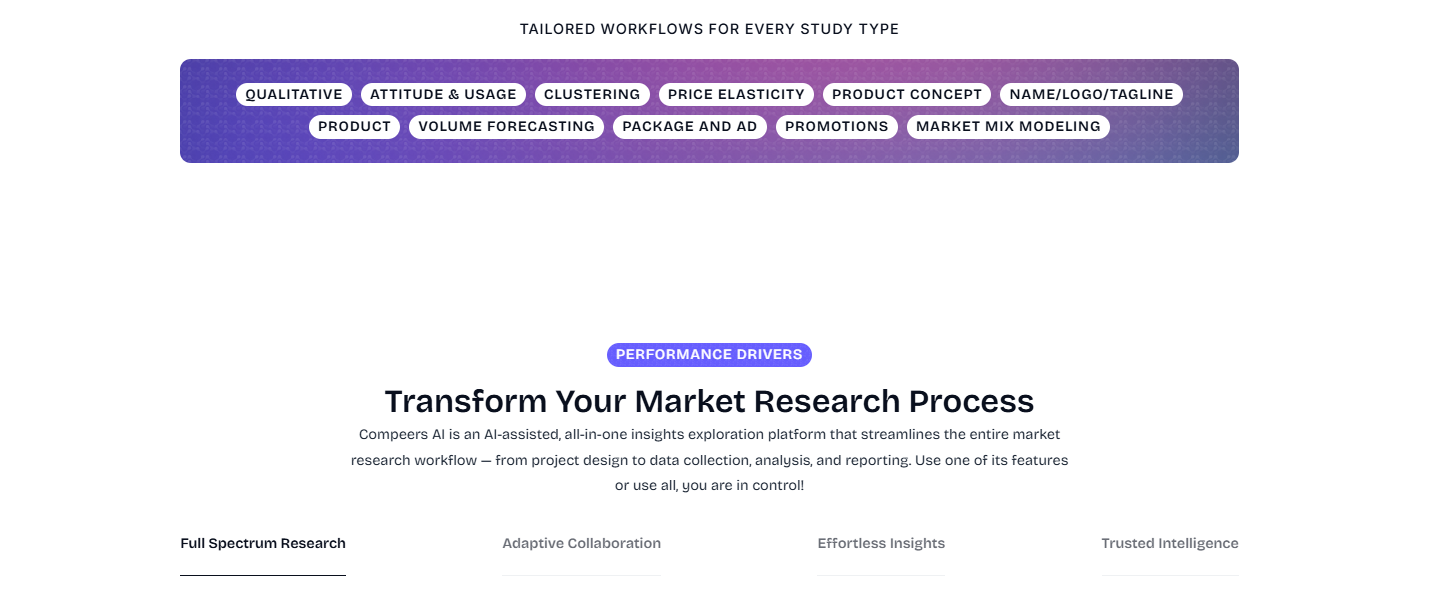
You can move from project design to data collection to research findings with more continuity, clearer logic, and less manual overhead.
Book a demo and spend less time combining inputs and more time making decisions!
FAQs About Best Customer Insights Software
What’s the difference between customer insights software and customer intelligence software?
Customer insights software typically focuses on capturing and analyzing customer behavior, sentiment, and feedback to help teams make better decisions. Customer intelligence software often goes a step further by combining more data sources, predictive models, and role-specific actions to help forecast future customer behavior and guide next steps.
What types of customer insights software do teams usually use?
Common types include research-led platforms for surveys and interviews, voice-of-customer systems for feedback and customer sentiment, conversation intelligence tools for service data, and analytics tools for combining CRM data, Google Analytics exports, and other business data into dashboards.
What are the main limitations of customer insights software?
The biggest limitations usually come from fragmented customer data, weak integration with existing systems, and unclear ownership of the output. Even advanced tools can struggle if the source data is messy, if teams collect feedback in silos, or if nobody is responsible for turning the findings into actionable feedback, informed decisions, and follow-through.
What does customer insights software need to succeed?
It needs clean inputs, enough context, and a clear path from analysis to action. Teams get better results when they define the customer segments they care about, connect multiple data sources, align the tool to business objectives, and decide who will use the outputs for product, marketing, customer service, or sales efforts.



.svg)
Custom research, reimagined
.svg)
.svg)
.svg)
.svg)