.svg)



7 Best Zappi Alternatives for Consumer Insights in 2026

Zappi changed the speed of consumer research. Brands no longer had to wait through long agency cycles to test concepts, ads, and creative ideas before launch.
But speed alone is no longer enough for most consumer insights teams. Many now need better survey execution, clearer reporting, broader methodology options, and a platform that keeps context connected from setup to outcome.
The right alternative depends on the kind of research the team runs most often.
Brand and innovation teams may care most about concept testing and fast feedback, while broader research teams may need qualitative research, advanced survey logic, segmentation, analytics, and first-draft reporting in the same workflow.
Below, we compare seven Zappi alternatives for consumer insights teams in 2026, looking at what each platform does, where it fits, and how it differs in terms of workflow depth, features, and pricing.
TL;DR
These are the best Zappi alternatives for consumer insights teams in 2026:
- Compeers AI
- Quantilope
- Suzy
- Upsiide
- Kantar Marketplace
- GetWhy
- Lyssna
What Is Zappi and Why Do Teams Look for Alternatives?

Zappi is a consumer insights platform built for automated testing in innovation, advertising, and brand research.
Teams use it to test concepts, creative, and campaigns faster, so consumer feedback can shape launch decisions, media planning, and product development without the long turnaround of a traditional agency-led process.
That speed is the reason many teams start with Zappi, but it is not always enough as research needs grow.
A team may begin with concept testing and then need deeper qualitative research, more advanced quantitative work, broader panel flexibility, AI-moderated video interviews, usability testing, or a workflow that keeps analysis and reporting tied to the original study.
Once the work goes beyond isolated testing, the search usually shifts from faster execution to a platform that supports more of the research process.
How We Picked The Best Zappi Alternatives
We shortlisted tools that can realistically replace or extend Zappi for consumer insights, marketing, and product teams. The list includes platforms built for innovation research, ad and brand testing, broader qual or quant workflows, and lighter self-serve tools where the overlap is still clear.
We used the following criteria to compare them:
- Fit for consumer insights and innovation research
- Support for concept testing, ad testing, packaging work, or brand testing
- Broader qualitative research or quant workflow depth where relevant
- Audience access, panel reach, and panel flexibility
- Reporting, analytics, and stakeholder usability
- Mix of self-serve and supported models
- Pricing transparency, where available
To make the shortlist easier to scan, this table compares insight speed, primary methodology, and the type of team each platform is most likely to suit.
7 Best Zappi Alternatives for Consumer Insights Teams
Not every tool on this list replaces Zappi in the same way. Some are closer to Zappi’s core testing model, while others offer more depth in methodology, workflow, or self-serve research for teams with different research needs.
Use the list below to compare the alternatives based on the type of research your team runs most often.
1. Compeers AI
Compeers AI is the best Zappi alternative for teams that need more than a fast testing tool. It gives research teams a single, integrated system for project design, data collection, analysis, and reporting, so concept testing doesn't get cut off from the rest of the research workflow.

The platform is modular, which means teams can use one product line or run more of the project in one place while keeping control over methods, outputs, and review.
Compeers AI supports guided qualitative and quantitative research workflows, AI-assisted creation of questionnaires and discussion guides, automated cross-tabs, advanced analytics, and first-draft reporting.
It also supports multilingual transcription, translation, and traceable outputs, making it a better fit for insights teams that need to connect data, analysis, and reporting without moving the project between separate systems.

The product line closely aligns with the job insights teams actually manage.
- Qualitative Compeer supports interviews, focus groups, transcription, translation, coding, and narrative development.
- Quantitative Compeer handles survey design, programming, analysis, and reporting.
- Segmentation Compeer applies factor analysis and multiple segmentation models.
- Short Responses Compeer speeds up open-ended analysis.
- Rapid Concept Evaluation Compeer supports structured concept testing.
- Savant keeps first-pass interpretation close to the data with natural-language querying, pattern discovery, and visual outputs.
Together, these products help teams keep context, reduce manual rework, and deliver clearer, traceable research outputs.
Key Features
- Connected qual, quant, segmentation, concept testing, and reporting workflow
- Advanced analytics, including regression, conjoint, and segmentation models
- Support for concept testing, ad effectiveness, U&A, and competitive benchmarking
- Survey design and survey execution in the same workflow
- Savant for natural-language analysis and first-draft insight development
- Modular setup so teams can use one product line or the full system
Pros
- Connects concept testing, qualitative research, quantitative research, and reporting in one workflow
- Keeps project context tied to the brief, data, analysis, and final output
- Supports custom research programs that need more depth than isolated testing tools
Pricing
- Custom pricing
Book a demo to bring concept testing, analysis, and reporting into one connected workflow!
2. Quantilope
Quantilope is built for teams that need advanced quant, not just fast automation. Its platform combines research automation, AI intelligence, 15 automated methods, real-time consumer insights, and access to 300M+ consumers through its panel network.

This makes it a practical alternative for concept testing, pricing, segmentation, and trend forecasting, where methodology matters as much as speed.
Quantilope offers deeper insights than Zappi-style point testing alone, with advanced survey logic, analytics, and quantitative methodology.
Key Features
- 15 automated research methods
- Less-than-one-second post-response insight access
- 300M+ consumers through a trusted panel network
Pros
- Gives teams advanced quant methods without rebuilding each study from scratch
- Makes complex survey execution easier to manage inside one structured system
- Includes support and tutorials that help teams learn unfamiliar methods faster
Cons
- Dashboard design can feel rigid when teams want a more polished visualization
- The interface can feel cluttered during a more involved survey setup
- Navigation takes more effort than lighter self-serve research tools
Pricing
- Business: Starts at $22,000
- Pro: Custom pricing
- Enterprise: Custom pricing
3. Suzy
Suzy brings speed, audience access, and conversational research into the same workflow. Its platform beta combines Signals, research, and data in one place, while Suzy Speaks adds AI-moderated conversations and real-time consumer insights.
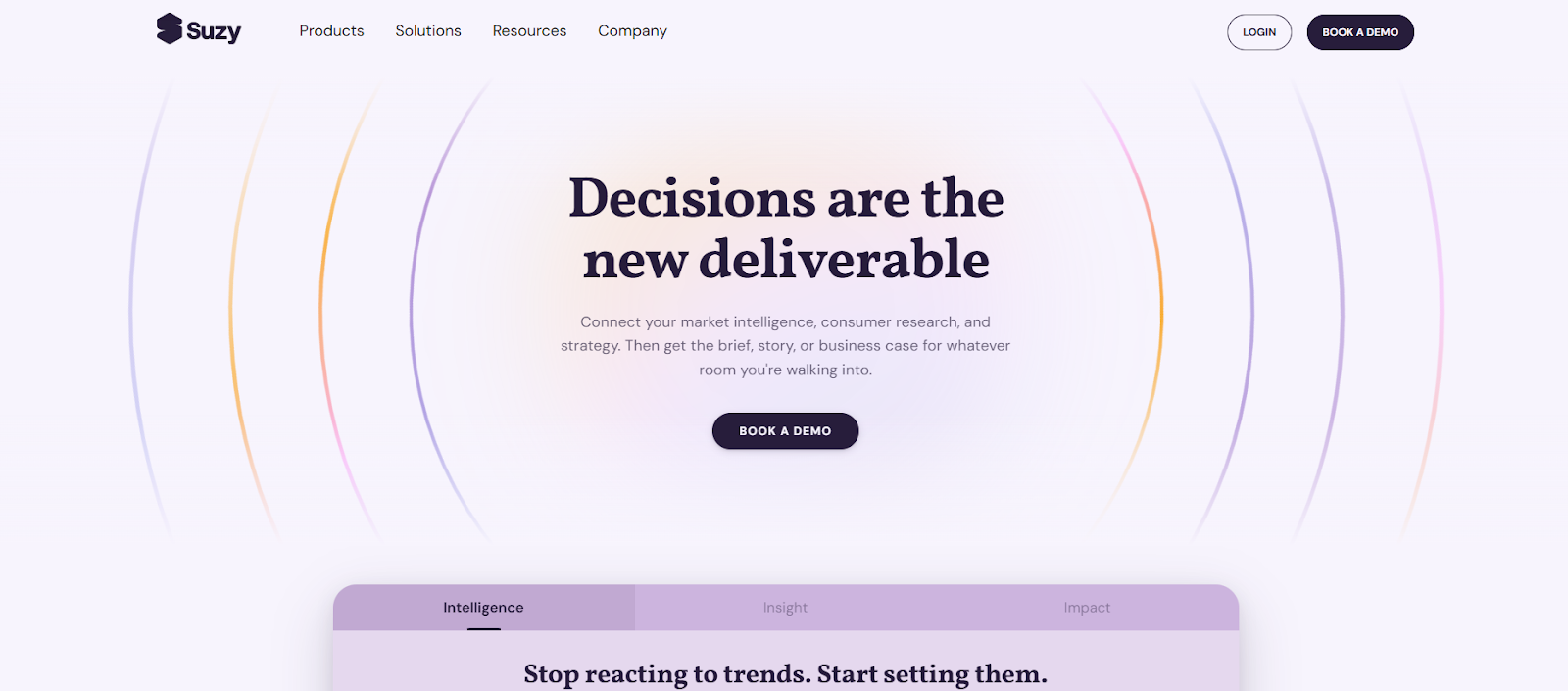
Audience access is a big part of the pitch. Suzy combines quant and qual workflows with a proprietary panel, so teams can move from surveys to deeper follow-up without rebuilding the process in a second tool.
For teams that want speed, supported service options, and connected evidence, that is a meaningful step up from isolated testing workflows.
Key Features
- Signals, Ask Suzy, and conversational research in one workspace
- Proprietary panel access
- AI-moderated voice research through Suzy Speaks
Pros
- Combines fast survey feedback with follow-up qual in the same workflow
- Gives teams quick access to consumer input for concept and creative decisions
- Helps teams work iteratively when speed matters more than heavy setup
Cons
- Survey customization is limited for teams that need more complex logic
- Audience diversity can be a constraint for niche or hard-to-reach segments
- Custom project organization is lighter than some teams need for larger programs
Pricing
- Free: 25 credits
- Pro: $150/month for 100 credits
- Team: $200/month for 200 credits
- Enterprise: Custom pricing
4. Upsiide
Upsiide gives innovation teams a faster way to validate product ideas before launch. Its mobile-first respondent experience and patented modeling help teams test concepts, packaging, and claims while estimating in-market potential.

That makes Upsiide one of the closest Zappi alternatives for concept-led work. The platform supports pre-built questionnaires, detailed targeting, and rapid responses, with many studies finishing within hours.
It is narrower than a full one-platform research system, but it is useful for brands that want idea screening and concept development without a heavy setup burden.
Key Features
- Idea screening and concept optimization
- Social-style respondent experience
- Predictive modeling for in-market potential
Pros
- Makes concept and idea screening easy to launch without a heavy setup
- Gives stakeholders fast, easy-to-read outputs for prioritizing concepts
- Delivers quick turnaround for teams running high-volume innovation testing
Cons
- Payment terms can feel restrictive for some research teams
- Panel feasibility can shift when targeting gets more demanding
- Report export options are less flexible than some teams want
Pricing
- Professional: $349/month
- Enterprise: Custom pricing
5. Kantar Marketplace
Kantar Marketplace is a modular automated market research platform for insights professionals, marketers, and agencies.

It covers ad testing, AI-powered ad testing, idea screening, AI-powered concept testing, brand insights, and customer experience insights, giving teams a broader testing range than Zappi if they want a single vendor for multiple research programs.
Its strength is breadth plus speed. Concept testing can return results in as few as 24 hours, while LINK AI can assess ads in as little as 15 minutes.
That makes Kantar Marketplace a practical option for brands that need concept testing, campaign optimization, market data, and trend forecasting within a single technology stack, with supported services and consulting available as needed.
Key Features
- ConceptEvaluate AI for innovation testing
- LINK AI for ad testing and media optimization
- Solutions for innovation, brand, and customer experience work
Pros
- Covers concept, ad, and brand testing in one modular research environment
- AI-driven analytics help teams read market and segment shifts faster
- Support quality comes through as a practical advantage in the review set
Cons
- Connections to other tools are limited for teams with wider research stacks
- Plan flexibility is limited when teams want more tailored commercial terms
- Feature depth can feel narrower once workflows move beyond its core modules
Pricing
- Custom pricing
6. GetWhy
GetWhy focuses on enterprise qualitative research delivered with AI and human support. The platform covers study design, recruitment, AI-moderated video interviews, synthesis, and activation, with PhD-level researchers embedded throughout.

This is the clearest option here for teams that want deep video interviews at scale.
GetWhy runs AI-moderated video interviews globally, supports 100+ languages, and adds video evidence to the final output, which gives product teams, insights teams, and strategy leads a much richer context than a standard concept testing platform.
Key Features
- End-to-end qualitative research workflow
- AI moderated video interviews with video evidence
- Global reach with 100+ languages and large-scale recruitment
Pros
- Brings AI-moderated video interviews and synthesis into one managed workflow
- Helps teams gather qualitative input quickly without running manual interviews at scale
- Gives researchers video-based evidence they can carry into reporting and activation
Cons
- Demographic matching can be uneven in some recruitment scenarios
- Organizing data for presentations can take extra manual work
- Presentation-layer tooling appears lighter than the interview workflow itself
Pricing
- Custom pricing
7. Lyssna
Lyssna is built for usability testing, interviews, surveys, prototype testing, live website testing, and panel-based research.
It is more closely aligned with UX and product validation than with full-scale consumer insights or brand testing workflows.

This makes it a useful option for product teams, UX researchers, and insights teams that need fast feedback on websites, app flows, messaging, and early concepts.
It is a better fit for digital experience research than for broader market research programs that need deeper methodology or reporting depth.
Key Features
- Usability testing, prototype testing, and interviews
- Research panel access with 690,000+ panelists
- Surveys with AI summaries and conditional logic
Pros
- Handles moderated and unmoderated testing in one place for faster review
- Gives teams a flexible study setup with templates, recruitment, and design tool support
- Keeps entry pricing lower than many enterprise research platforms
Cons
- Pricing can become hard to predict once credits and limits stack up
- Live web testing and participant screening need more customization
- Survey logic is lighter than dedicated survey or insight platforms
Pricing
- Free: $0/month
- Growth: $199/month
- Enterprise: Custom pricing
How to Choose the Right Zappi Alternative
A team focused on concept testing, campaign feedback, or packaging work will need a different setup than a team running broader qualitative research, tracking consumer preferences, or building ongoing competitive intelligence into decision-making.
Workflow depth matters just as much as speed.
Some teams only need faster testing and basic reporting, while others rely on a platform that can support survey execution, analysis, reporting, and stronger integration with the rest of the research process.
Audience access is another practical filter.
If your team needs built-in recruitment, panel flexibility, or quick turnaround from idea to feedback, those features can save significant time. If your team already has sample sources or prefers more control over methodology, broader workflow support may matter more than built-in access.
Pricing and support should be part of the final decision, too.
A sales-led platform can still be the right fit, but the value depends on how much support your team needs, how often you run studies, and whether you want a lighter testing tool or a system your marketing teams and insights teams can rely on for more than one type of research.
Run Consumer Research in One Connected System
A fast concept test doesn't solve the bigger workflow problem. Many teams still brief in one place, field research in another, analyze results in spreadsheets, and build the final story by hand.
That setup slows down more than it speeds up. It breaks context, creates extra cleanup, and makes it harder to connect the original research question to the final recommendation.
Once concept testing, qualitative research, survey execution, and reporting are handled in separate tools, the work becomes harder to manage and harder to trust.
With Compeers AI, research teams get one system to handle the work from setup through analysis and first-draft reporting.

It supports concept evaluation, qualitative and quantitative research, segmentation, advanced analytics, and natural-language exploration within a single workflow, so the project doesn't lose continuity as it moves to new stages.
The brief stays connected to the data, the analysis stays connected to the outputs, and the final story is easier to review, explain, and use.
Book a demo and explore how Compeers AI connects research setup, data, and final output!
FAQs About Zappi Alternatives
Why do teams look for a Zappi alternative?
Teams usually look for Zappi alternatives when they need a different balance of pricing, methodology, workflow depth, or audience access. Common reasons include the need for broader qualitative research, more advanced survey logic, better reporting, greater panel flexibility, or a platform that goes beyond concept testing and campaign work.
Can small insights teams use a Zappi alternative?
Yes, as long as the platform matches the team’s budget, workflow, and research volume. Some alternatives are easier for smaller insights teams to adopt, while others are better suited to larger programs with more complex research needs.
What is Zappi used for?
Zappi is used for automated consumer insights work tied to innovation, advertising, and brand research. Teams use it to test concepts, campaigns, and ideas faster, keep feedback connected over time, and support decision-making with consumer input instead of slower agency-led cycles.



.svg)
Custom research, reimagined
.svg)
.svg)
.svg)
.svg)