.svg)



10 Best Market Research Software to Use in 2026

Market research software now covers much more than surveys. Teams use it to collect data, run qualitative research, analyze findings, and turn raw inputs into reports people can act on.
That makes software choice more important, especially for teams looking to use AI for market research and reduce manual work without sacrificing quality.
We’ve reviewed 10 of the best market research software tools for different parts of the workflow, from end-to-end systems to survey platforms and feedback tools.
TL;DR
These are the best market research tools to use in 2026:
- Compeers AI
- Quantilope
- Suzy
- Pollfish
- SurveyMonkey
- Zappi
- Typeform
- Bolt Insight
- QuestionPro
- Alchemer
What Is Market Research Software?
Market research software refers to digital tools that help teams plan studies, collect data, analyze findings, and turn research into something people can use. It can cover surveys, qualitative research, dashboards, reporting, panel access, and workflow support over different data collection methods.
The purpose of market research software is to help teams conduct market research with more reliable data, better structure, and faster access to actionable insights.
Most platforms fall into a few broad groups:
- Some focus on surveys and audience reach
- Some support qualitative research and qualitative data analysis
- Some handle reporting, dashboards, and data visualization
- Some bring several parts of the research process into one system
That range is what separates market research software from narrower online market research tools that only collect survey responses.
Advanced market research tools usually support a bigger part of the workflow, whether that means survey creation, advanced analytics, reporting, or mixed-method research.
Teams use this software for:
- Brand research
- Competitor analysis
- Customer satisfaction
- Customer behavior and customer preferences
- Marketing campaigns
- Identifying untapped segments
Some teams also use market research software to measure brand perception, track market shifts, and build a clearer view of their target audience through demographic, qualitative, and quantitative data.
A social listening product can still help with consumer sentiment and market trends, but it does not replace market research software. Market research firms, in-house teams, and consultants still need tools that support survey design, focus groups, structured analysis, and a clearer path from raw data to decisions.
10 Best Market Research Software Tools in 2026
The tools below solve different parts of the market research workflow. Some are built for full custom research, some are closer to survey software, and some fit a narrower step, such as concept testing, brand research, or qualitative data analysis.
Let's get deeper into each one, so you'll find the right fit.
1. Compeers AI
Compeers AI is an AI-assisted research system built for teams that need more than a standalone market research tool.
If your team runs custom studies throughout surveys, interviews, open ends, and reporting, you need one place to keep the work connected from setup through final delivery.
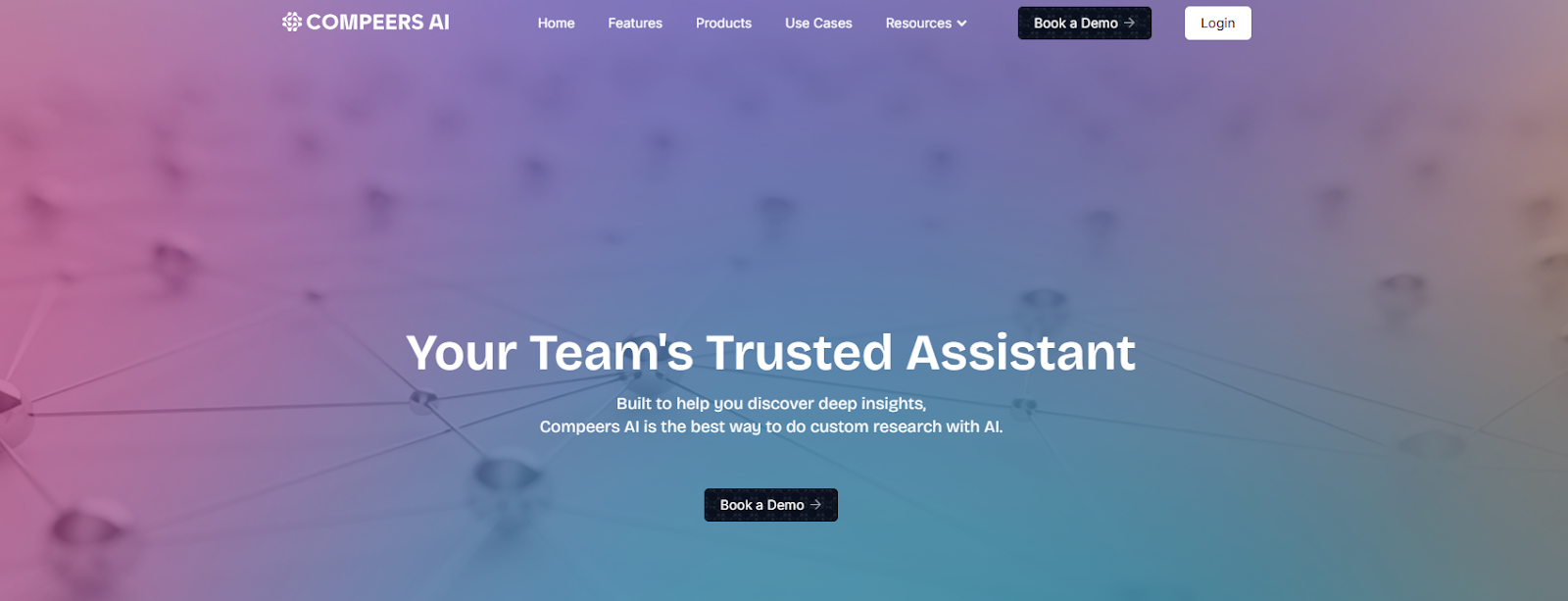
Compeers AI supports qualitative, quantitative, and mixed-methods research, rapid concept testing, and ad hoc analysis in a single workflow.
Your team can build discussion guides and questionnaires, automate survey programming, handle transcription and translation, code responses, run cross-tabs, and apply advanced analytics without switching between tools.
Savant adds conversational analysis, data slicing, trend discovery, and data visualization across qualitative and quantitative work.
This fits teams dealing with fragmented workflows, tighter deadlines, and greater pressure to deliver clear answers without sacrificing rigor.
When research spans survey tools, spreadsheets, analysis tools, and reporting files, it becomes harder to maintain context, protect data quality, and tie research objectives to final outputs.
Compeers AI helps your team keep human judgment close to the work, reduce repetitive tasks, and produce traceable deliverables that are easier to review and trust.
Key Features
- Create discussion guides, questionnaires, and automated survey programming in one connected workflow.
- Run transcription, translation, sentiment analysis, cross-tabs, and advanced analytics through qualitative and quantitative research.
- Use Savant to explore data through natural language queries, visual outputs, and traceable research findings.
Pricing
- Pricing is custom
Book a demo to see how Compeers AI runs custom market research in one connected workflow!
2. Quantilope
Quantilope is a consumer intelligence platform built around structured quantitative research. It's aimed at brands and research teams that need advanced methods, real-time insights, and a research process that moves faster than traditional market research methods.
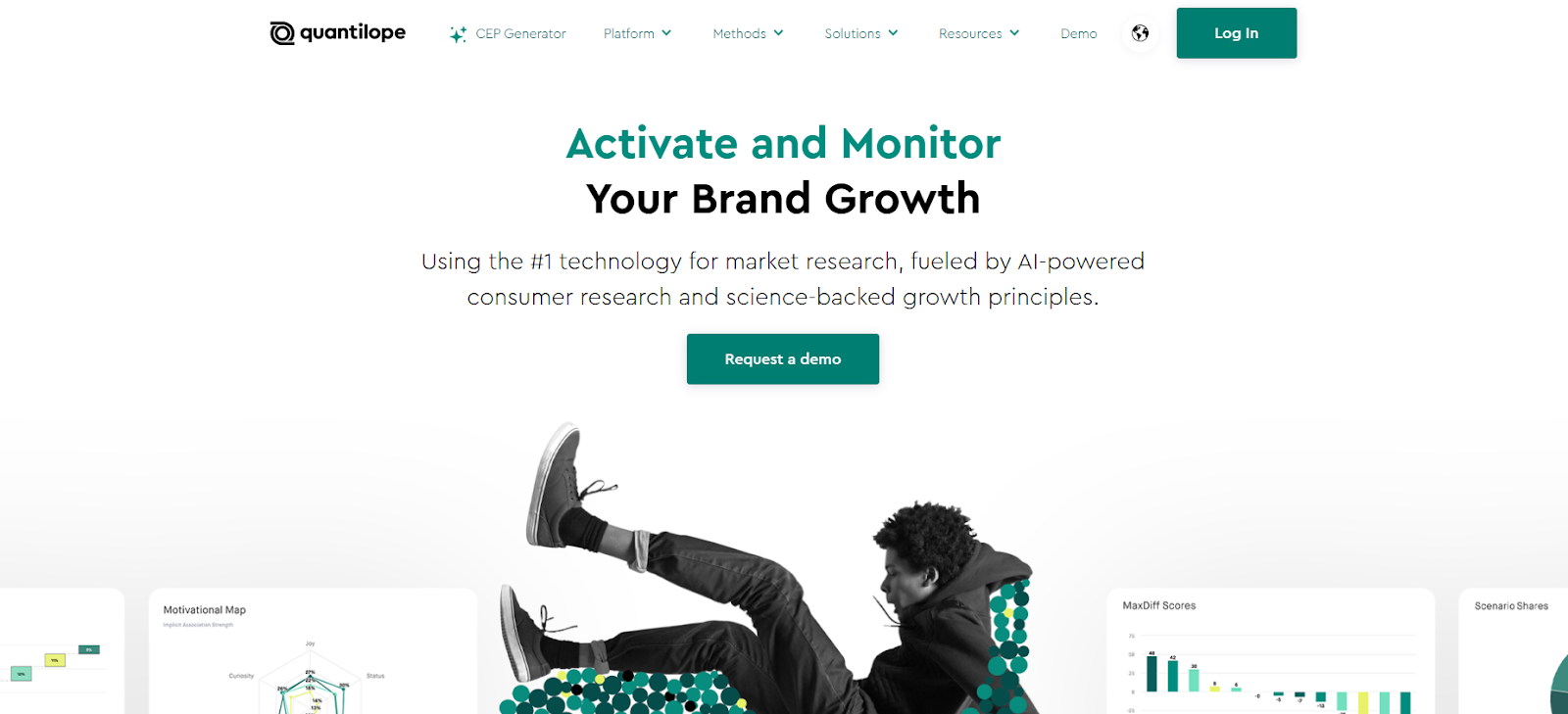
The platform offers automated survey workflows, AI-guided setup, and a large library of advanced methods. It covers use cases such as segmentation, pricing, conjoint, tracking, and brand work, while its integrated AI co-pilot, Quinn, supports drafting, editing, charting, and faster data analysis.
This tool suits research teams that already run a lot of quantitative work and want more automation inside that workflow.
Key Features
- It includes 15 automated advanced methods for quantitative market research.
- Quinn adds AI support for study setup, charting, and analysis inside the platform.
- It supports tracking studies and global respondent access through a 300M+ partner network.
Pricing
- Business plan: Starts at $22,000
- Pro plan: Custom pricing
- Enterprise plan: Custom pricing
3. Suzy
Suzy is a decision intelligence software built for teams that need consumer insights quickly. It's used throughout product, brand, sales, and marketing teams that want a faster way to connect market shifts, customer feedback, and current signals to day-to-day decisions.
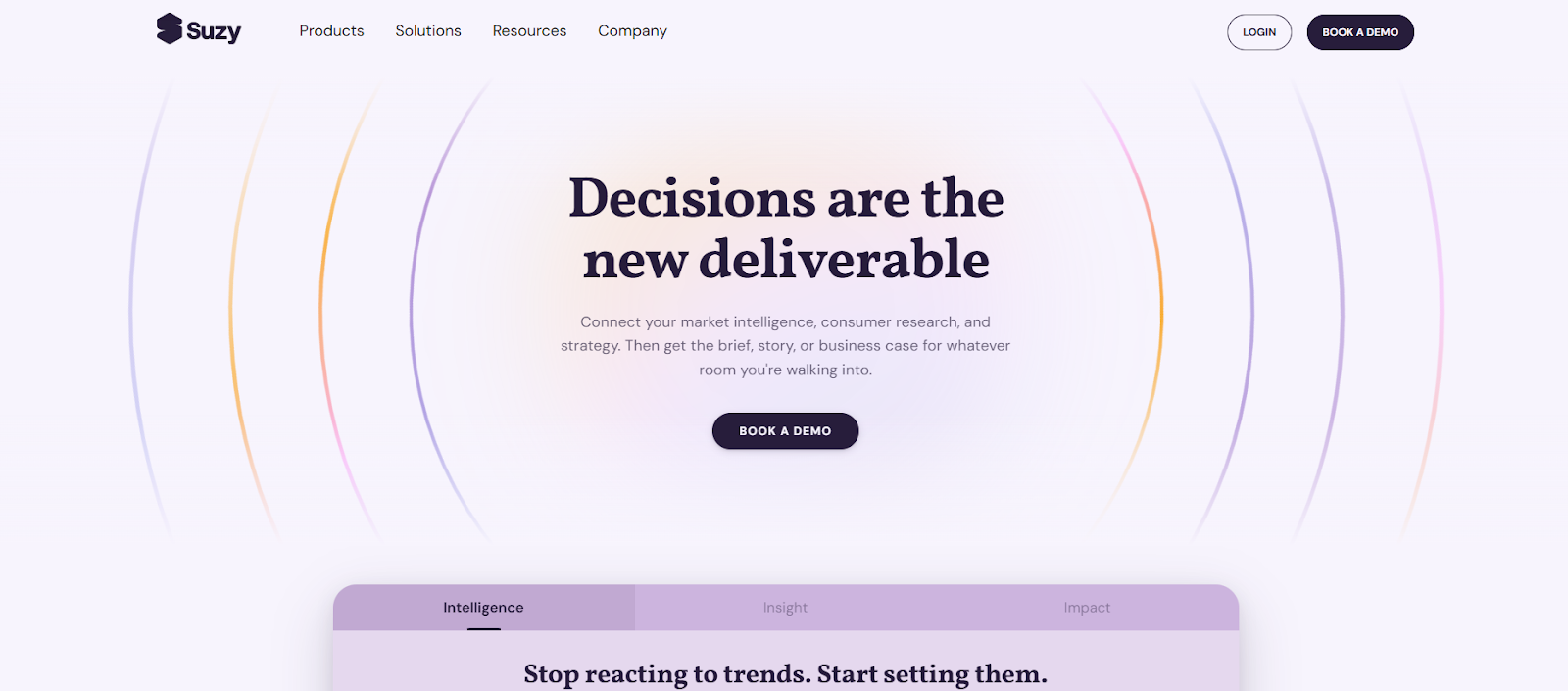
The platform combines Signals, conversational research, and data exploration in one environment.
Ask Suzy Chat, Talk to Consumers, and Query Data help teams move from question to research findings without setting up a larger custom project every time.
It's more useful for fast-turn work than for deep custom research that spans broader qualitative research methods or advanced quantitative design.
Key Features
- It combines Signals, research, and data in one shared product.
- Ask Suzy Chat, Talk to Consumers, and Query Data support faster consumer research workflows.
- Pricing is credit-based, which makes it easier to scale usage through solo users and teams.
Pricing
- Free plan: 25 credits
- Pro plan: $150/month for 100 credits
- Team plan: $200/month for 200 credits
- Enterprise plan: Custom pricing
4. Pollfish
Pollfish is market research software built around surveys and owned audience access. It's built for marketers, researchers, and consultants who need to launch online surveys fast, collect data from a broad target audience, and get real-time insights without stitching together separate tools.
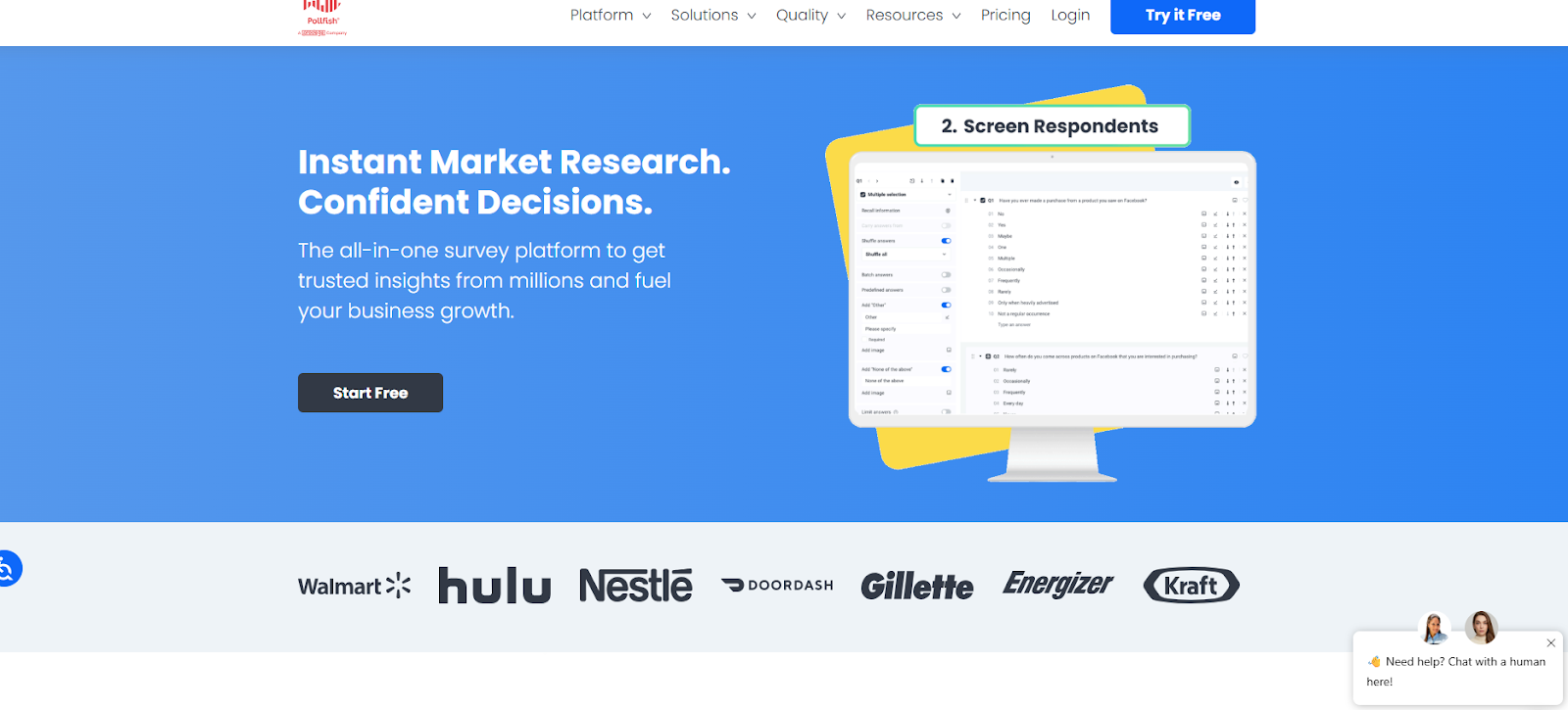
Pollfish combines an AI survey builder with DIY survey creation, audience targeting, screeners, quotas, and analysis.
It also gives teams access to millions of respondents through an owned audience model, which helps when market research efforts depend on speed, demographic data, and easier reach over multiple channels.
Pollfish suits teams that need a survey platform first and a broader market research survey tool second. It's useful for concept tests, brand research, campaign checks, and customer feedback studies, especially when the main goal is to collect data quickly and move from survey creation to results with minimal setup.
Key Features
- The AI Survey Builder can turn a prompt or uploaded document into a launch-ready survey.
- The platform supports targeting, screeners, quotas, skip logic, and other advanced survey controls.
- Pollfish includes access to owned audiences and in-platform analysis to deliver faster survey responses and market insights.
Pricing
- DIY platform: Starts at $0.95 per response
- Full-service projects: Start at $5,000 per project
- Enterprise: Start at a $10,000, annual commitment
5. SurveyMonkey
SurveyMonkey is one of the most widely used survey software platforms. It's used by teams that need survey creation, audience reach, templates, and analysis in a tool that is easy to deploy through recurring research projects.
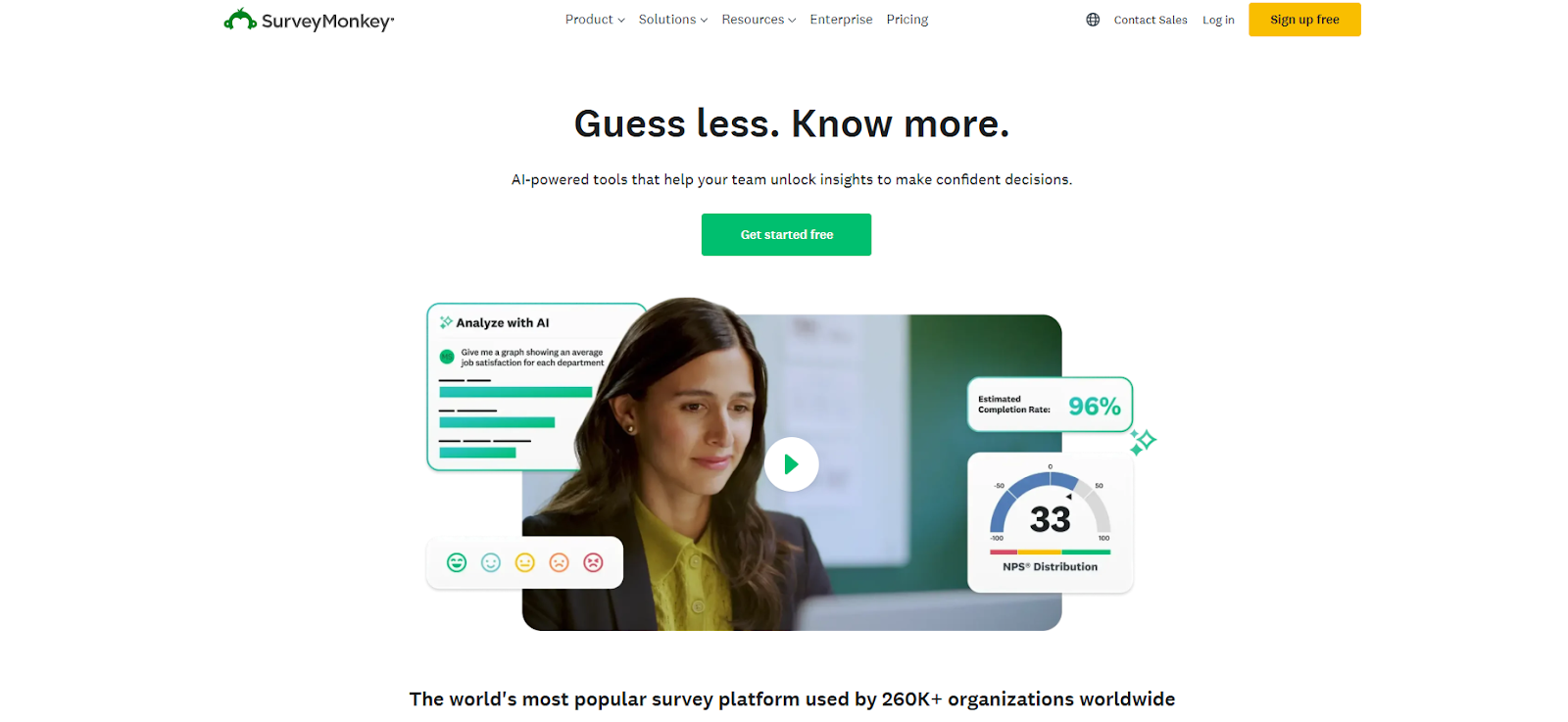
The product covers surveys, forms, and market research, with AI-assisted survey building, logic, branding, integrations, and access to a 335M+ audience panel across 130+ countries.
It also includes market research solutions such as concept testing, price optimization, and other proven methods, which make it more than a simple survey tool.
SurveyMonkey fits teams that want a flexible market research software option for customer satisfaction, brand research, survey responses, and regular tracking.
Key Features
- It includes AI-assisted survey design, templates, and logic with branching.
- It offers audience targeting through a global panel of 335M+ people in 130+ countries.
- It supports analysis, exports, and always-on research programs through surveys and forms.
Pricing
- Team Advantage: €30/month
- Team Premier: €75/month
- Enterprise: Custom pricing
6. Zappi
Zappi is market research software built for repeated consumer learning. It fits brands that want to test ideas, track brand questions, and keep learning from past research instead of treating every study as a separate project.
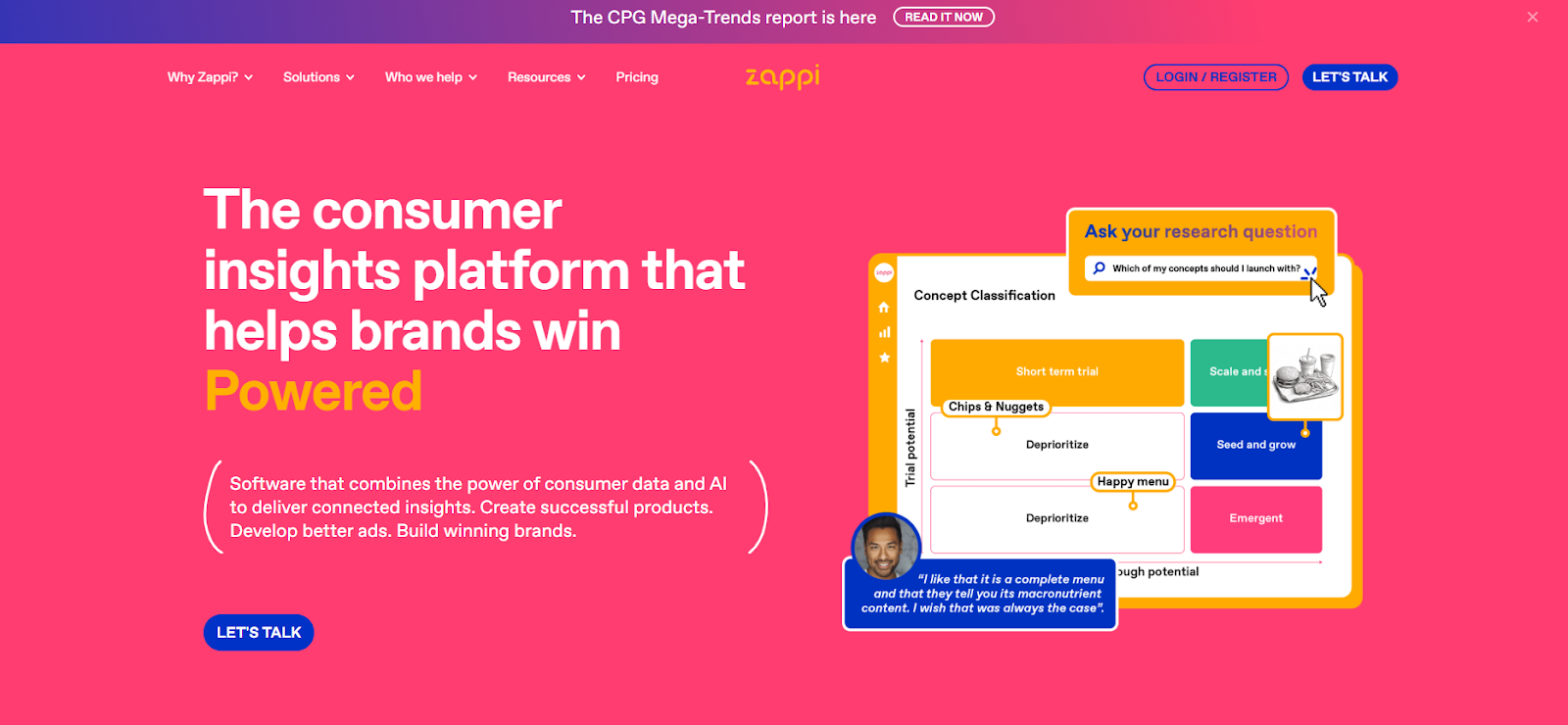
Zappi brings on-demand research, automated AI-generated reports, all project data in one workspace, and a subscription-plus-credit model for study execution.
It also supports flexible benchmarks, automated analysis, and advanced analytics, helping teams move from raw data to clearer outputs with less manual reporting work.
Zappi is a suitable choice for consumer brands that run repeated tests throughout innovation, advertising, and brand health.
Key Features
- It combines on-demand research, automated AI-generated reports, and one shared workspace for insights.
- It supports benchmarks, automated analysis, and connected learning across previous studies.
- It's built around innovation, advertising, and brand tracking workflows.
Pricing
- Premium: Custom pricing
- Enterprise: Custom pricing
7. Typeform
Typeform is survey software known for its one-question-at-a-time format and polished respondent experience. It's widely used by marketing, product, and smaller research teams that want a survey platform that feels more conversational than traditional form builders.
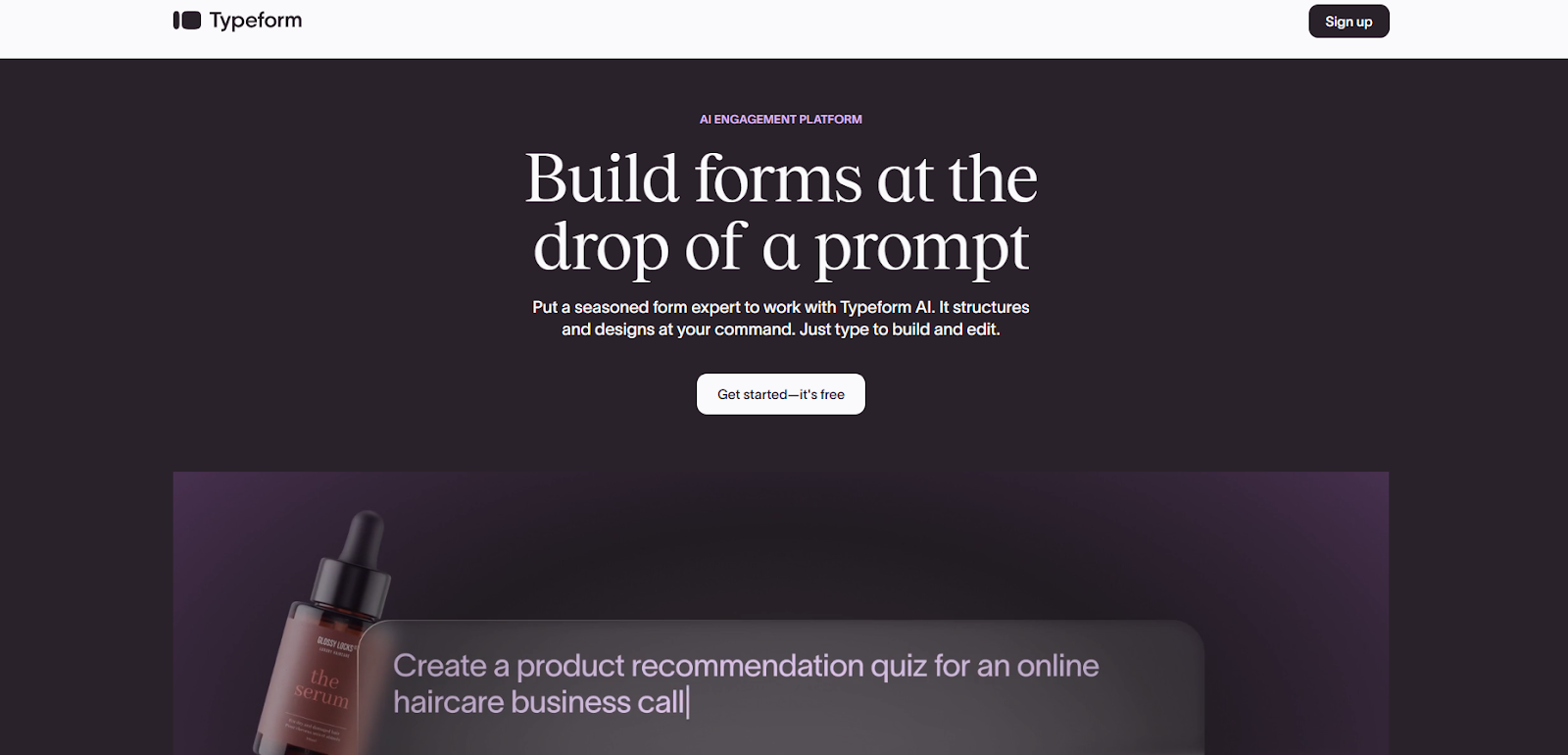
Typeform includes AI forms, AI-driven insights, multi-language support, video questions, and integrations that connect survey data to the rest of the workflow.
For market research, it's useful as a survey tool for concept checks, customer feedback, audience studies, and surveys that require a cleaner front-end experience.
It's less suited to heavier market research methods that need panel access, advanced sampling, or deeper qualitative data analysis inside the same product.
Key Features
- It supports AI forms, AI-assisted insights, and conversational survey creation.
- It offers multi-language survey support, video questions, and workflow integrations.
- It's designed to improve completion and collect richer responses through a conversational format.
Pricing
- Basic: $39/month
- Plus: $79/month
- Business: $129/month
- Enterprise: Custom pricing
8. Bolt Insight
Bolt Insight is research software built around AI-powered qualitative and quantitative studies with human support still attached. It's used by organizations that want global research coverage, faster qualitative workflows, and a closer link between AI moderation and decision-ready outputs.
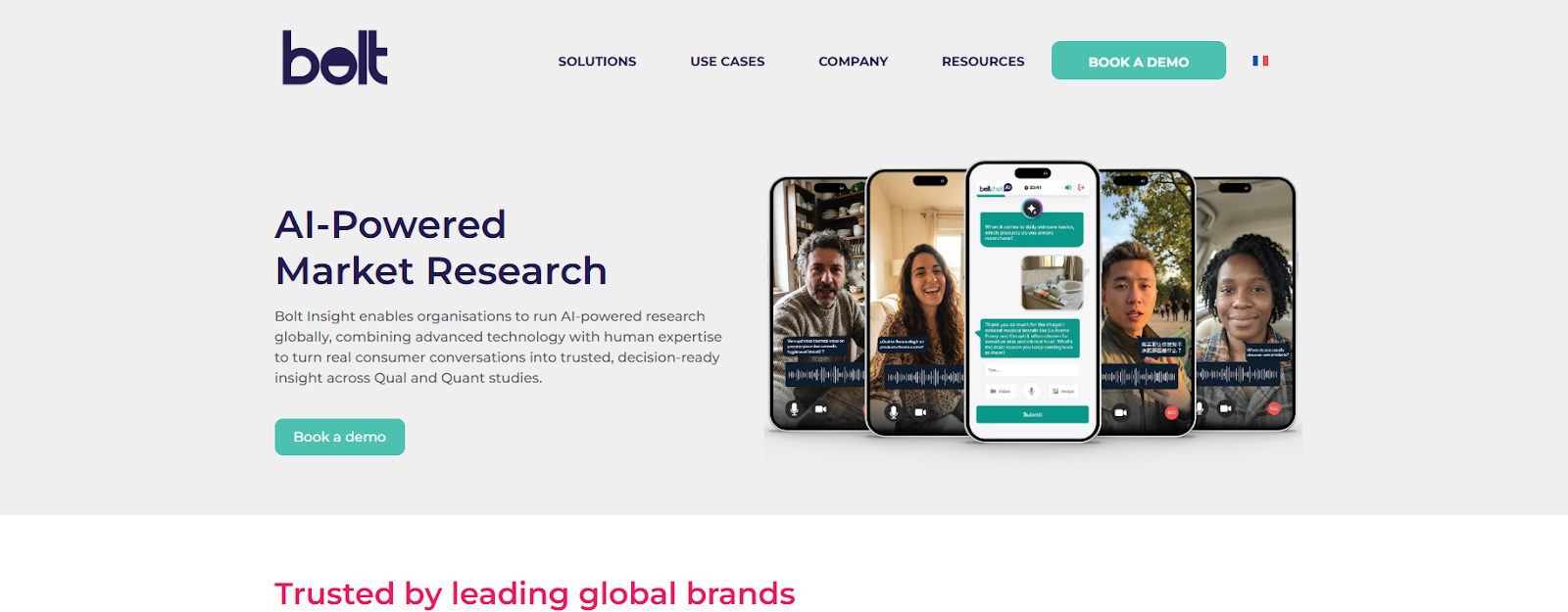
BoltChatAI adds features such as Meta-Analysis and Dynamic Personas, which help teams compare past studies, analyze market trends through time, and build richer profiles from interviews, trend reports, survey results, and other data sources.
Bolt Insight suits teams that rely on qual-heavy workflows, multilingual research, and a wider view of consumer sentiment across markets.
Key Features
- It supports AI-powered qual and quant research across 50+ markets and 25+ languages.
- BoltChatAI includes Meta-Analysis for comparing studies through time, segments, and markets.
- Dynamic Personas build evolving audience profiles from uploaded research and external data.
Pricing
- Custom pricing
9. QuestionPro
QuestionPro is market research software that combines survey creation, communities, panel access, and analytics inside one system. It's used by research teams that want to conduct market research with both quantitative and qualitative workflows instead of relying on a basic survey platform alone.
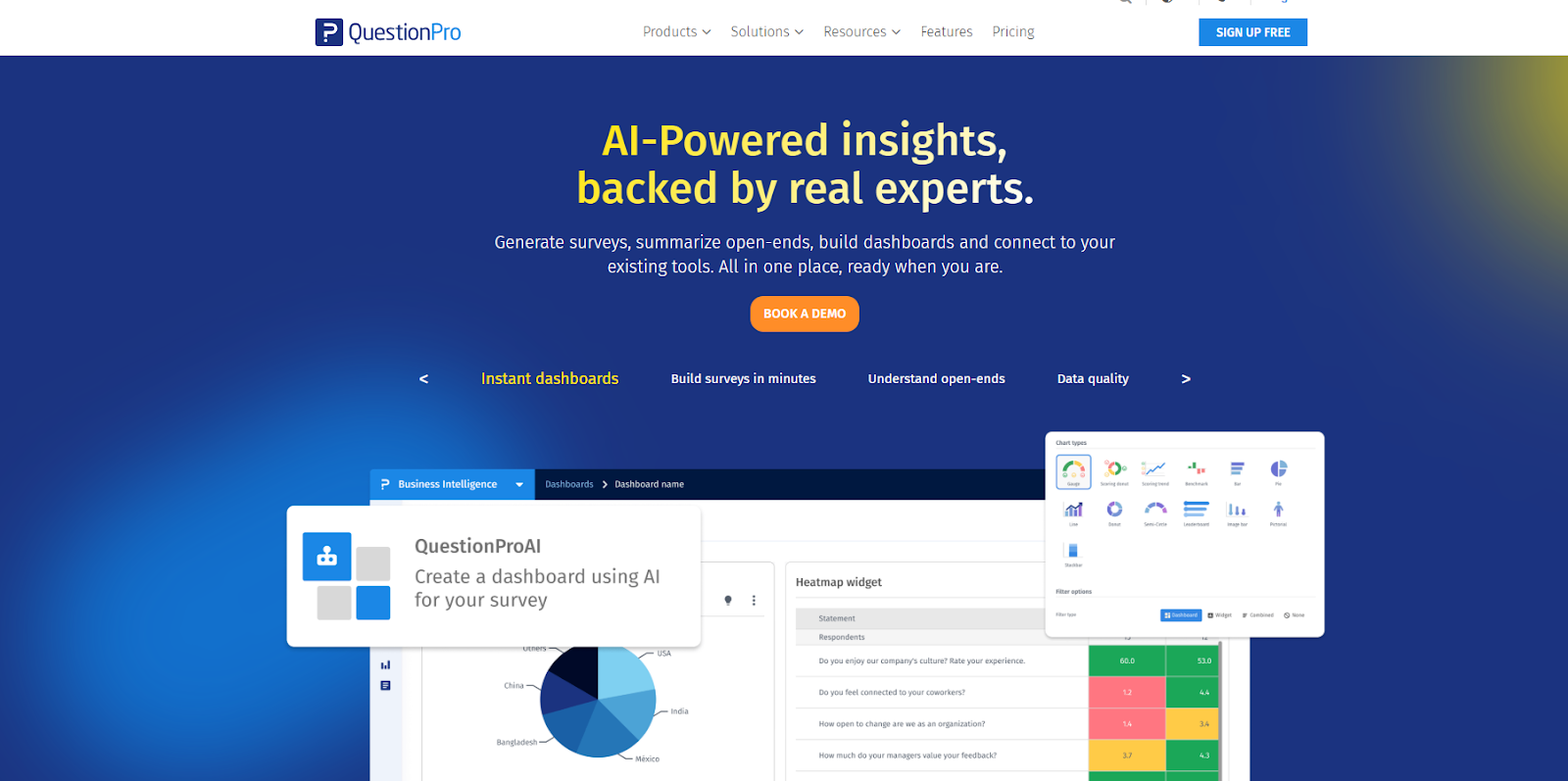
QuestionPro combines survey tools, real-time dashboards, advanced data analytics, qualitative communities, and access to 22+ million panelists across 32 countries, with 300+ profile data points.
It also supports conjoint, TURF, trend analysis, audience sampling, and broader research repository workflows, making it useful for teams that want comprehensive insights throughout multiple study types.
QuestionPro fits research teams that need more than survey software but still want a structured, self-serve product.
Key Features
- It combines surveys, qualitative communities, and panel access inside one research software stack.
- It includes advanced analytics such as conjoint analysis, TURF analysis, GAP analysis, and trend analysis.
- It gives access to 22M+ panelists and 300+ profile data points for audience targeting.
Pricing
- Essentials: Free
- Advanced: $99 per user per month, billed annually
- Team edition: $83 per user per month, billed annually
- Research suite: Custom pricing
10. Alchemer
Alchemer is survey and feedback software built for organizations that want more control over how feedback moves through the business. It sits between simple survey software and larger feedback platforms, offering polling, market research, reporting, and integrations.
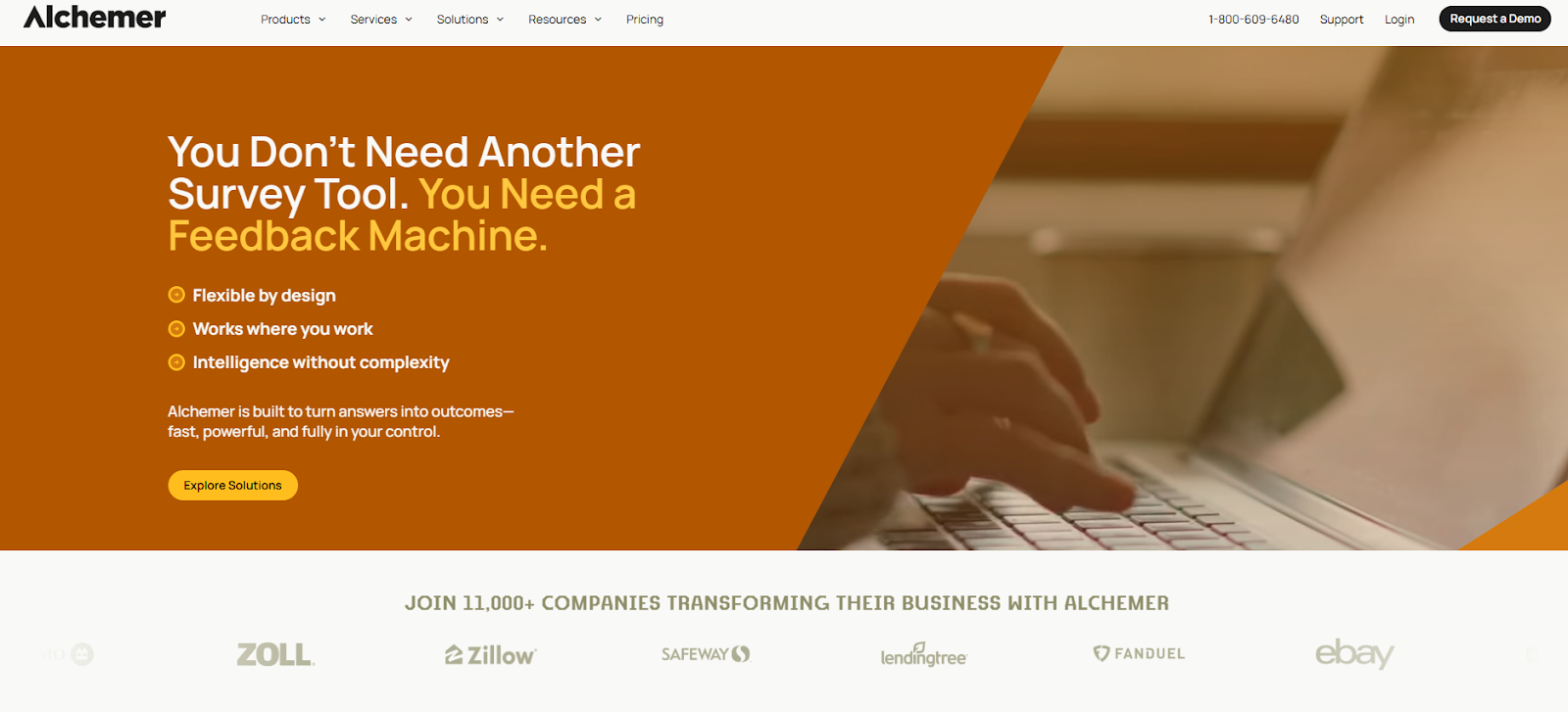
Alchemer includes unlimited surveys, advanced logic, advanced reporting, AI-powered analysis, and options for omnichannel feedback collection.
For research work, it supports global studies, multi-language surveys, and real-time analysis, while the broader product line also connects to existing systems to help teams collect feedback and act on it faster.
Alchemer suits teams that need flexible survey workflows and reporting, plus a path into more operational feedback programs.
Key Features
- It supports advanced logic, advanced reporting, and AI-powered analysis.
- It offers omnichannel feedback collection and integration with existing business systems.
- It includes market research support for global studies, multi-language surveys, and real-time analysis.
Pricing
- Collaborator: $55/user/month
- Professional: $165/user/month
- Full access: $275/user/month
- Business platform: Custom pricing
How to Choose the Right Market Research Software
The right software starts with the role your team actually needs to do.
Use these checks before you choose:
- Match the tool to your research objectives. If your work centers on brand research, competitor analysis, customer satisfaction, or measuring brand perception, choose software built for those workflows instead of a generic survey tool.
- Check the method fit early. Check whether the platform supports qualitative research methods, quantitative data analysis, online surveys, focus groups, or advanced analytics. A survey platform can help collect data, but it may not support deeper qualitative data analysis or broader market research methods.
- Review audience and channel coverage. If you need reliable data from a precise target audience, check panel access, demographic data, sampling controls, and multiple data-collection channels.
- Review data quality and accuracy controls. Reliable outputs depend on data quality checks, respondent screening, and cleaner handling of raw data before analysis. That matters for supporting informed business decisions, informed decisions, and data-driven insights.
- Think about integrations and downstream use. Some teams need software that connects to customer relationship management systems, reporting stacks, or internal workflows so research findings do not get trapped in one app.
- Check output quality, not only input speed. Good software should help transform raw data into comprehensive, valuable, and actionable insights that people can use in marketing and business strategies.
Bring Your Market Research Workflow Into One System
Market research software should make the workflow easier to run and easier to trust. When survey creation, data collection, qualitative data analysis, advanced analytics, and reporting are stored in separate tools, teams spend too much time moving files instead of building market insights.
With Compeers AI, it's the opposite; you spend more time building market insights and less time moving files or doing any manual work.
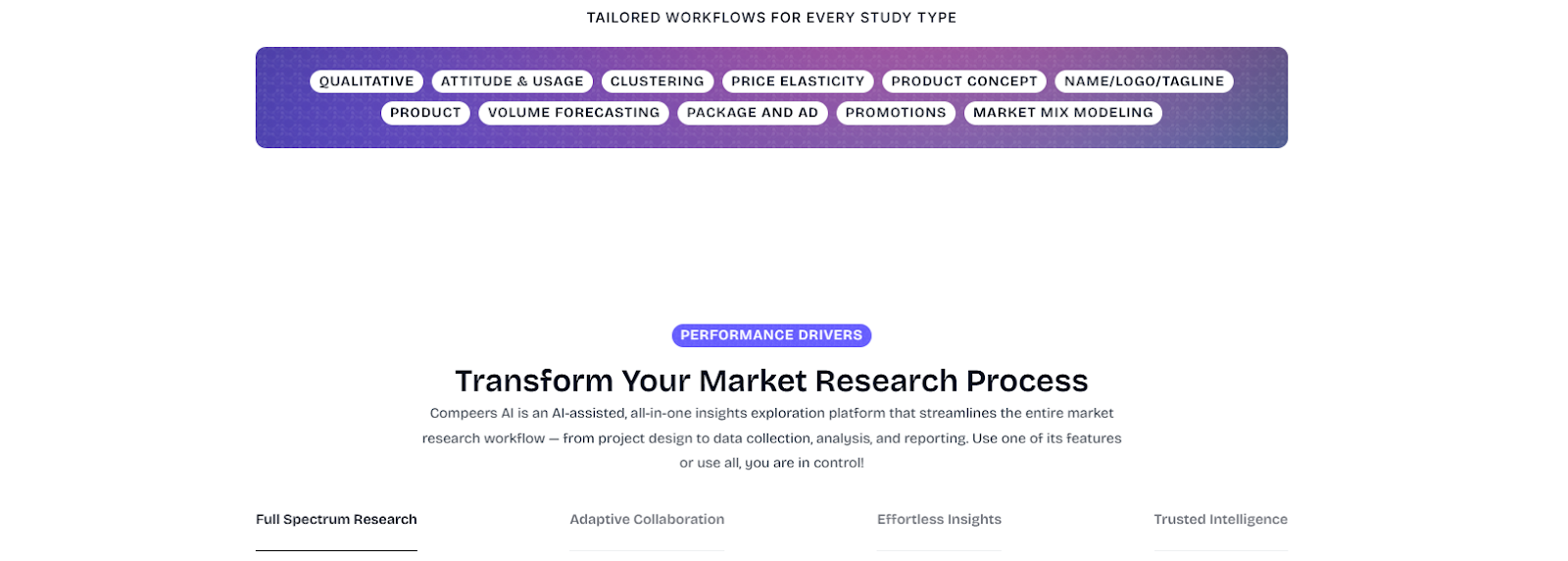
Your team gets one connected system for custom market research across qualitative, quantitative, and ad hoc analysis.
You can move from project design to data collection to research findings and final outputs with more continuity, better traceability, and less manual overhead.
Book a demo to see how Compeers AI helps your team handle complex research in one workflow!
FAQs About Best Market Research Software
How should teams compare market research software pricing?
Start with the pricing model. Some tools charge per user, some charge by usage, and some only offer custom quotes. Then look at what is included, such as panel access, analytics, exports, support, and how much manual work the software removes.
What’s the difference between market research software and survey software?
Survey software mainly helps teams create surveys, collect responses, and review basic results. Market research software covers a broader workflow, including panel access, qualitative research, reporting, and tools to analyze data for deeper insights.
Can market research software replace research agencies or analysts?
Market research software can speed up workflows and make research easier to run, but it does not replace human judgment. Teams still need people to shape the study, interpret findings, and connect the results to real business decisions.
Latest articles
Browse all posts


.svg)
Custom research, reimagined
.svg)
.svg)
.svg)
.svg)