.svg)



7 Best Insights Platforms for Consumer Research in 2026

Insights platforms cover a range of tools, from customer data and feedback systems to full consumer research platforms for surveys, qualitative studies, analytics, and reporting.
The tools in this guide help research teams collect and analyze data, then turn feedback into clear insights for market research, brand tracking, segmentation, concept testing, and product launches.
Teams are moving toward these platforms because disconnected tools slow work down. When research, analysis, and reporting sit in separate systems, it leads to delays, poor knowledge sharing, and more pressure to back decisions with stronger data.
Below, you’ll find seven insights platforms worth considering for consumer research, testing, analysis, and reporting in 2026.
TL;DR
These are the best insights platforms if your team needs consumer research, testing, analysis, and reporting in a single connected process:
- Compeers AI
- Quantilope
- Suzy
- GWI
- Brandwatch
- Zappi
- Upsiide by Dig Insights
What to Look for in an Insights Platform
An insights platform should help your team move from research to business decisions without losing rigor. The right choice comes down to workflow fit, data quality, and reporting depth, not just category labels.
When you compare insights platforms, look for:
- Support for real research tasks, like concept testing, brand tracking, segmentation, campaign evaluation, UX research, and product development.
- Coverage for quantitative survey research, qualitative research, or both, based on how your team runs studies.
- Advanced analytics, predictive analytics, advanced features, data integration, and reporting that help stakeholders reach informed decisions without extra manual cleanup.
- A delivery model that matches your team, whether that is self-serve, guided, or hybrid.
- Clear pricing and sales motion, because many tools in this category still rely on demos, credit models, or custom contracts.
Tools built mainly for website behavior, customer analytics, social media analytics, or support-led customer feedback can still be useful. They don't replace a consumer research platform built for structured studies, multiple channels, multiple sources, and decision-ready outputs.
7 Best Consumer Insights Platforms
The platforms below do not all solve the same problem. Some support end-to-end consumer research, while some go deeper in advanced quant, innovation testing, public conversation analysis, or fast-turn conversational workflows.
Start with the kind of work your team needs to do most, then match that need to the shortlist below.
1. Compeers AI
Compeers AI gives research teams one connected system for project setup, survey design, qualitative fieldwork, analysis, and first-draft reporting.

It is built for custom consumer research where teams need to carry context from the original brief through data collection, advanced analytics, and final delivery without splitting the work between separate tools, files, and vendors.
The Compeers AI product line covers the parts of the workflow that usually get pushed into different systems or handed off between teams:
- Qualitative Compeer supports IDIs, focus groups, transcription, translation, coding, and narrative development.
- Quantitative Compeer handles questionnaire design, survey programming, respondent quality checks, cross-tabs, open-ended coding, and reporting.
- Segmentation Compeer applies factor analysis and multiple segmentation models.
- Short Responses Compeer speeds up fast-turn open-end work.
- Rapid Concept Evaluation Compeer helps teams test and compare ideas faster.
- Savant adds natural-language querying, trend discovery, and traceable analysis, so researchers keep control while moving faster.
Together, these products help teams keep the project connected, reduce manual rework, and deliver traceable insights that stakeholders can review with confidence.
Key Features
- Connected qual, quant, segmentation, and reporting workflow
- AI-assisted questionnaire and discussion guide creation
- Advanced analytics and first-draft outputs
- Natural-language data exploration with Savant
- Traceable outputs and knowledge retention with researcher control
Pros
- All-in-one platform for qual, quant, and ad hoc analysis
- Helps teams keep context from the brief to the final output
- Fits mixed-method and custom research programs well
Pricing
- Custom pricing
Book a demo to see how Compeers AI connects research setup, analysis, and reporting in one workflow!
2. Quantilope
Quantilope is designed for advanced methods, tracking, and AI-supported analysis, making it a fit for segmentation, pricing, brand tracking, and concept testing programs that need faster execution without sacrificing methodological depth.

Quantilope brings automated methods, real-time results, and its Quinn AI co-pilot into a single workflow, so teams can launch studies, monitor waves, and review findings within one quant-focused system rather than building each project from scratch.
Key Features
- 15 automated research methods
- Real-time tracking and dashboard updates
- Quinn AI co-pilot for analysis support
- Panel-agnostic sampling with global reach
- Automated reporting for advanced quant studies
Pros
- Easy survey creation and day-to-day use
- Built-in advanced methods help small teams run complex studies in-house
Cons
- Navigation and usability can feel uneven in places
- Some teams mention design and dashboard limitations
Pricing
- Business: Starts at $22,000
- Pro: Custom pricing
- Enterprise: Custom pricing
3. Suzy
Suzy fits teams that need connected evidence fast. For fast-turn work, it feels closer to an automated consumer insights platform than a traditional project-by-project research setup.
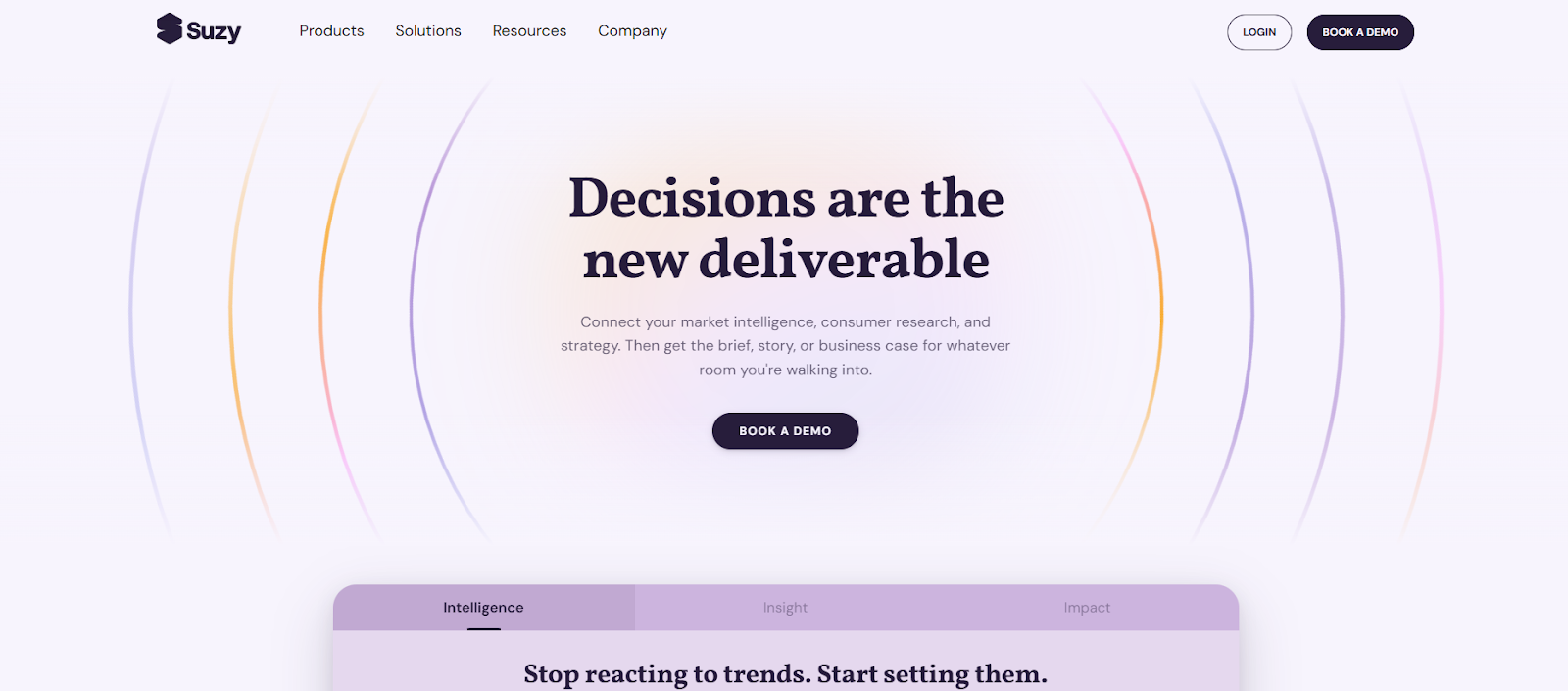
Its current positioning combines market intelligence, consumer research, strategy support, and an on-demand audience into one decision engine, with plans that include Signals, Ask Suzy chat, conversational research, and team collaboration.
That makes it useful for fast concept checks, creative testing, targeted customer insights, and quick-turn qual-quant loops when the business needs answers in hours, not weeks.
It is especially relevant for insights teams seeking a conversational research platform with built-in audience access.
Key Features
- On-demand audience access
- Conversational research tools
- Ask Suzy chat
- Signals for market and trend monitoring
- Connected research and data workspace
Pros
- Fast concept and creative testing with quick turnaround
- Easy setup, templates, and a workflow that blends qual and quant
Cons
- Survey design has some guardrails and customization limits
- Credit management and theme organization can create extra work
Pricing
- Free: 25 credits
- Pro: $150/month for 100 credits
- Team: $200/month for 200 credits
- Enterprise: Custom pricing
4. GWI
GWI is less of an end-to-end primary research engine and more of a human insights system built on large-scale survey data.

It gives research and strategy teams a fast way to profile audiences, analyze customer behavior and purchasing behavior, build charts, create real-time dashboards, and generate presentation-ready outputs.
With 250K+ profiling points, crosstabs, Agent Spark, and Canvas, it supports audience strategy, brand tracking, category context, and planning backed by defensible consumer data.
Key Features
- 250K+ profiling points
- Charts and detailed dashboards
- Crosstabs for deeper analysis
- Agent Spark AI analyst
- GWI Canvas for presentation slides
Pros
- Reliable, widely accepted data for audience work
- Easy setup and long-running datasets help teams track trends over time
Cons
- Less useful for open-ended exploratory work
- Some markets need richer local or cultural detail, and filtering can be limiting
Pricing
- Free: $0/month
- Plus: $150/month
- Teams: Custom pricing
- Pro: Custom pricing
5. Brandwatch
Brandwatch Consumer Research earns its place when your team needs consumer insights tools from public online conversations, not just survey-led research.

It pulls data from Twitter (X), Reddit, Tumblr, blogs, forums, news sites, review sites, and video sites, then layers in segmentation, sentiment, key topics, demographics, dashboards, alerts, and exports.
It is a better fit for trend analysis, brand mentions, digital channels, and competitive benchmarking than for classic full-service survey programming, but it goes well beyond lightweight social listening.
Key Features
- Full firehose access from major public sources
- Historical archive dating back to 2008
- Sentiment, key topic, and entity analysis
- Dashboard templates and automated reports
- Data Upload API for surveys, tickets, and call logs
Pros
- Broad data coverage supports trend and conversation analysis
- Dashboards, AI-assisted analysis, and support are useful for research teams
Cons
- Query building and onboarding can take time
- Noise reduction and manual refinement still matter in some studies
Pricing
- Consumer Intelligence: Custom pricing
6. Zappi
Zappi centers on continuous consumer testing for innovation, advertising, and brand work. The platform connects those within a single system, helping teams keep consumer input in view as they test ideas, refine campaigns, and track what is likely to perform in the market.
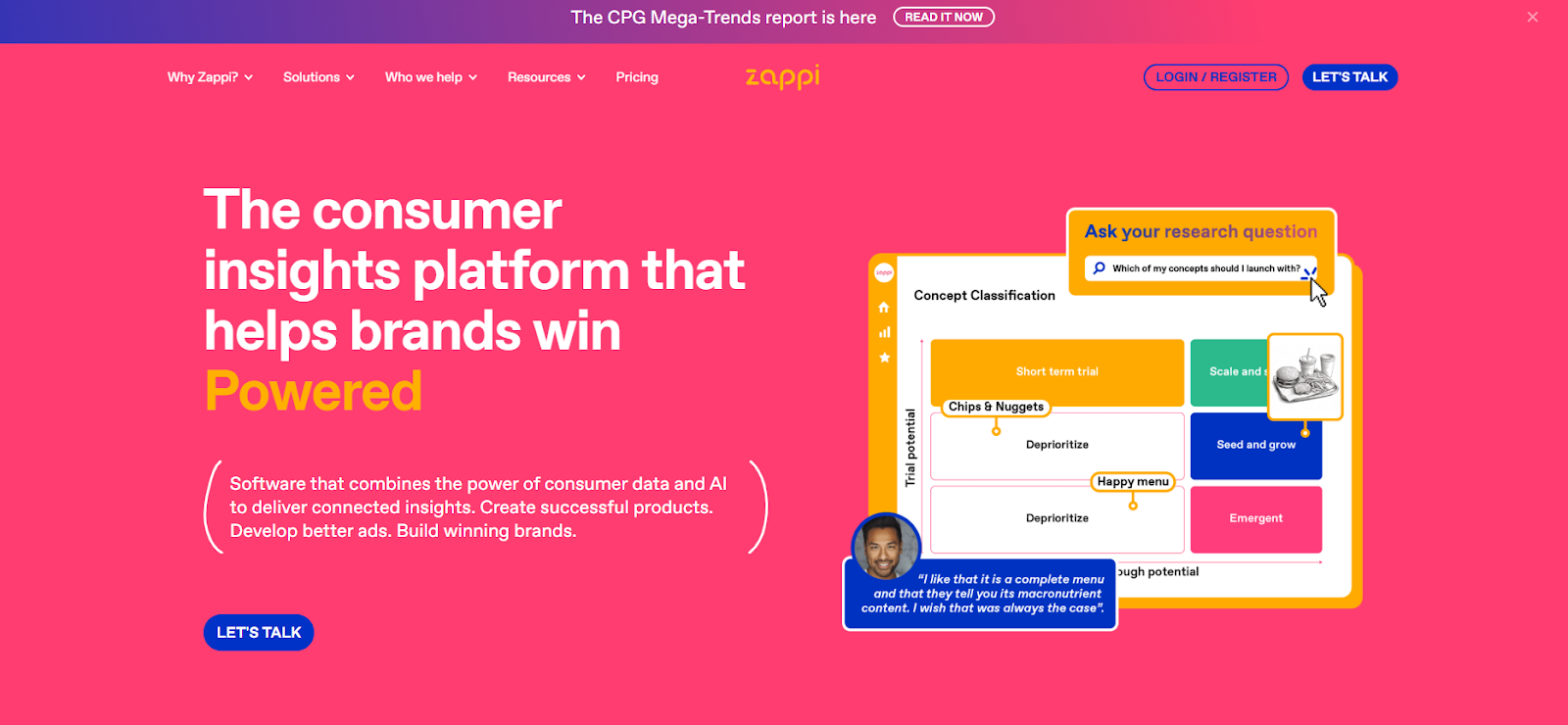
That structure enables businesses to test ideas faster and keep learning tied to real brand and innovation decisions.
Brands using it for product launches, creative validation, and brand health work get a structured process with reusable learning, while those that need deeper qualitative workflow management typically require a broader research platform.
Key Features
- Innovation testing system
- Advertising research system
- Brand Health Tracker
- Instant slides and export-ready reporting
- AI-supported continuous feedback loop
Pros
- Fast turnaround for concept and creative testing
- Reporting and export workflows are easy to use
Cons
- Continuity between some solutions can be limited
- Some teams want more customization and deeper analysis options
Pricing
- Premium: Custom pricing
- Enterprise: Custom pricing
7. Upsiide by Dig Insights
Upsiide focuses on idea screening and innovation validation. It gives respondents a social-media-style testing experience and helps researchers use patented modeling to forecast in-market potential, rank opportunities, and show where a concept needs work before launch.

Because it's tied closely to the innovation workflow, Upsiide is more specialized than the broader insights platforms on this list.
Teams screening products, packaging, claims, or messaging can move quickly from concept exposure to decision-ready results, while larger research programs may still need additional tools to cover the full qualitative and quantitative workflow.
Key Features
- Idea screening and innovation validation
- Pre-built study templates
- Access to 44M+ respondents
- Real-time result dashboards
- Behavioral and attitudinal modeling
Pros
- Easy setup and quick turnaround
- Dashboards help teams turn results into decisions quickly
Cons
- Raw data export and whole-survey export could be easier
- Subscription pricing can feel rigid for some teams
Pricing
- Professional: $349/month
- Enterprise: Custom pricing
Bring Consumer Research Into One Connected System
Research teams lose time when project design, analysis, reporting, and data collection are split across separate tools. Each handoff creates more room for delays, version issues, and missing context.
That fragmentation makes the work harder to manage and harder to trust. Teams spend more time rebuilding the story, checking files, and piecing together evidence from multiple data sources instead of focusing on the decisions the research needs to support.
Compeers AI brings those steps into one connected system.

It supports mixed-methods research, advanced analytics, traceable outputs, and researcher control within a single workflow, so the project's logic remains intact from setup to final reporting.
That continuity helps teams move faster without losing rigor. It also makes knowledge easier to retain, results easier to review, and final outputs easier to explain to stakeholders who need clear, defensible insights.
Compeers AI gives research teams one platform to manage the work with more clarity, less rework, and better control over the entire research process.
Book a demo to see how Compeers AI brings consumer research into one connected system!
FAQs About Insights Platforms
What is an insights platform?
An insights platform is software that helps teams gather, organize, analyze, and present data to make better business decisions. In the consumer research context, it typically combines audience data, survey and qualitative research, analytics, and reporting, rather than relying on a single dataset or dashboard.
What is the difference between an insights platform and market research software?
Market research software can refer to almost any tool used in research, including survey tools, text analytics tools, brand tracking tools, and social listening products. An insights platform typically connects multiple steps in a process and helps research teams turn raw data from multiple sources into actionable insights.
Can small insights teams use an insights platform?
Yes, as long as the platform matches the team’s budget, workflow, and research needs. Some tools are easier for small businesses or lean insights teams to adopt, while others are better suited to larger teams with more complex programs.
What is the difference between an insights platform and Google Analytics?
An insights platform is built to help teams collect, organize, and analyze data for consumer research, customer insights, and business decisions. Google Analytics is focused on website performance, user behavior, landing pages, engagement metrics, and drop-off points. It helps teams understand how users interact with a site, but it does not replace a consumer research platform built for survey research, brand tracking, reporting, and broader decision support.
Do insights platforms support brand tracking?
Yes. Many insights platforms support brand tracking through survey research, ongoing audience measurement, or connected reporting workflows. That helps research teams monitor customer insights, compare shifts over time, and turn repeated studies into better data for planning and decision-making.



.svg)
Custom research, reimagined
.svg)
.svg)
.svg)
.svg)