.svg)



Best AI Market Research Platforms for 2026: A Best-Fit Comparison

An enterprise team investigating a new market may need fresh research with human respondents, analysis of online conversations, or competitor intelligence delivered to sales teams. Although products supporting these tasks are often grouped under the label “AI market research platforms,” they produce different evidence and support different decisions.
The practical starting point is not a vendor ranking. It is the business question, the evidence needed to answer it, and the workflow required to turn that evidence into a defensible recommendation. This comparison is based mainly on documented vendor capabilities, not an independent performance benchmark.
TL;DR
There is no independently established best platform for every research team. Consider Compeers AI for broad qualitative, quantitative, or mixed-method custom research with real human respondents; quantilope for repeatable advanced quantitative consumer research; Qualtrics for a broad enterprise research suite and searchable research repository; Zappi for standardized innovation and advertising testing; Brandwatch Consumer Research for online consumer conversations; and Klue for B2B competitive intelligence and sales enablement.
Before choosing, verify the evidence source, supported methods, workflow stages, human review model, output formats, governance, packaging, and pricing for the proposed deployment.
Start with the type of evidence your team needs
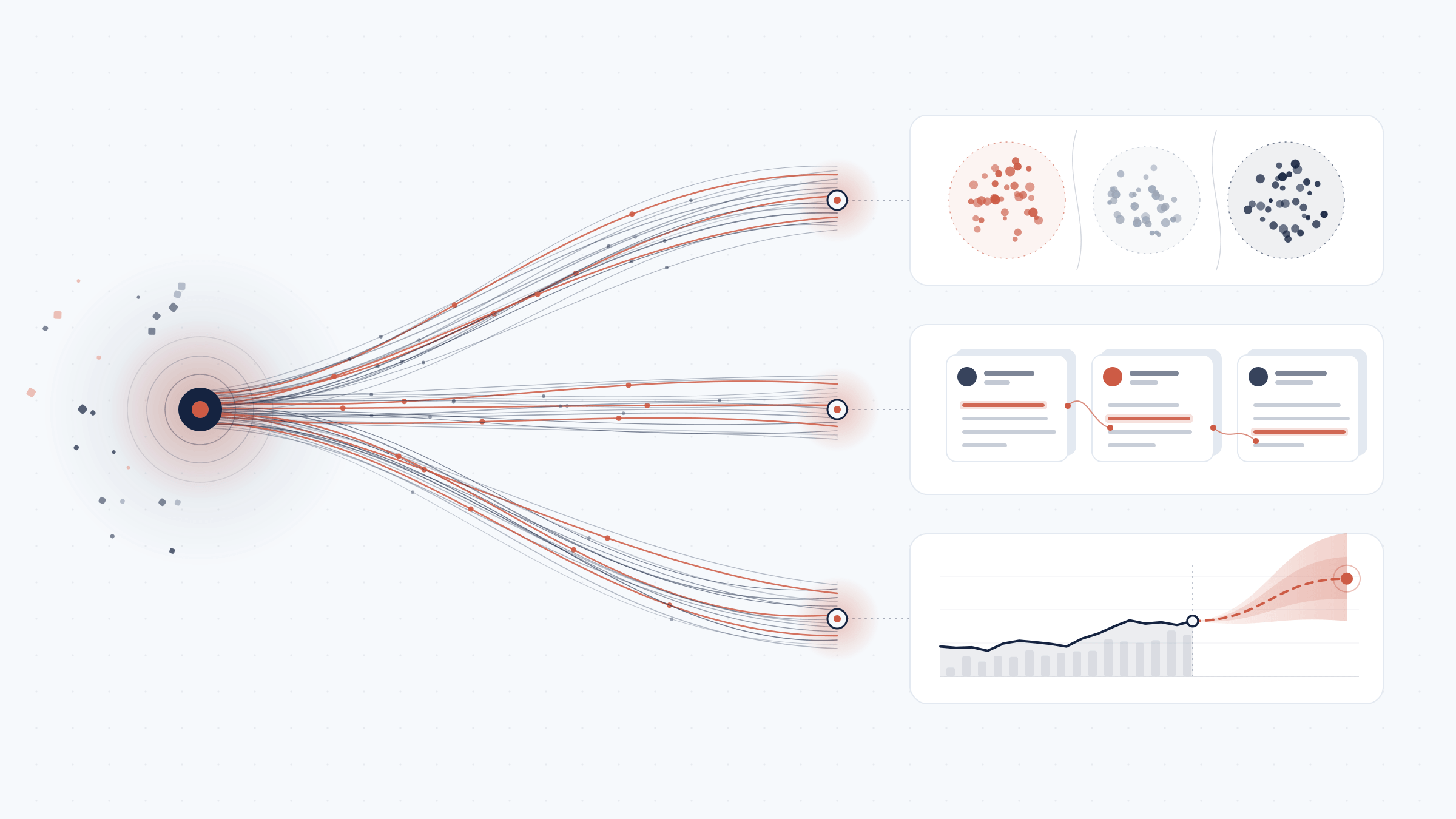
Platforms should only be compared directly when they address a similar research job. Four broad categories clarify the main differences.
Primary custom research
Primary custom research gathers new evidence for a defined business question using research participants. It may use qualitative methods to explore experiences, quantitative methods to measure patterns, or mixed methods to combine depth and measurement.
Buyers should examine how respondents are sourced, how studies are designed and fielded, and where human methodological oversight occurs. AI-assisted execution does not make different samples or research designs interchangeable.
Innovation and creative testing
Innovation-testing systems standardize recurring decisions such as idea screening, concept evaluation, packaging, pricing, and advertising testing. Their value lies in supporting repeatable use cases, but buyers should not assume that a specialized testing system covers every exploratory or custom methodology.
Digital consumer intelligence
Digital consumer-intelligence platforms analyze online conversations and other unstructured sources. This evidence can reveal topics, language, sentiment, cultural context, or emerging discussion, but it should not automatically be treated as representative primary survey research. The source population, coverage, and analytical method determine what conclusions are justified.
Competitive enablement
Competitive enablement software collects and organizes competitor information, competitive profiles, win/loss findings, battlecards, and answers for commercial teams. This is distinct from recruiting consumers and conducting primary market research fieldwork, even when both activities inform market strategy.
Some market analysis platforms span multiple categories. Enterprises should still confirm which modules, methods, data sources, and services are included in the proposed deployment.
AI market research platforms compared
The following comparison focuses on each platform’s primary job, documented workflow coverage, insight delivery, and material questions to verify. It does not assign numerical scores because the available evidence does not provide a neutral, standardized test of quality or performance.
The table shows why a single ordered ranking would be misleading. Brandwatch and Klue may both support intelligence work, but the former focuses on online consumer conversations and unstructured data, while the latter supports competitor intelligence in commercial workflows. Neither should be evaluated as though it produces the same evidence as newly fielded respondent research.
Packaging also matters. Qualtrics documents both a broad market research software platform and a separate Research Hub, but buyers should verify which capabilities are included in a particular proposal. The same principle applies to every suite with multiple products or service levels.
What are the best AI market research platform options for 2026?
There is no independently established best platform for every research team. The right choice depends on the type of research, evidence, and workflow required.
- Compeers AI — broad custom market research. Supports qualitative, quantitative, and mixed-method research with real human respondents across an end-to-end research workflow.
- quantilope — advanced quantitative research. Supports repeatable consumer research with methods including conjoint, MaxDiff, segmentation, pricing research, tracking, and implicit testing.
- Qualtrics — broad enterprise research. Covers market, competitive, product, innovation, UX, and brand research, with additional capabilities for storing and searching research artifacts.
- Zappi — innovation and creative testing. Focuses on standardized workflows for idea screening, concept, packaging, pricing, and advertising testing.
- Brandwatch Consumer Research — digital consumer intelligence. Analyzes online conversations and first-party data for topics, sentiment, trends, and emerging consumer discussions.
- Klue — B2B competitive intelligence. Focuses on competitor profiles, win/loss insights, battlecards, and competitive information delivered into commercial workflows.
These are best-fit categories based on documented capabilities, not a ranking of overall platform quality.
How to evaluate research depth, workflow coverage, and insight delivery
Enterprises should compare AI market research platforms against a common requirements framework. Six areas expose differences that polished demonstrations can otherwise obscure.
Research depth
List the methodologies needed now and those reasonably expected later. Assess whether the platform supports exploratory and confirmatory questions, suitable sampling and fieldwork controls, advanced analytical needs, and accountable human methodological oversight.
Workflow coverage
Map each product against planning, study design, fieldwork or source collection, advanced analytics, analysis, visualization, reporting, and continued exploration. Ask vendors to distinguish native capabilities from separate modules, integrations, managed services, or manual work.
Insight delivery
Identify how each audience needs to use the findings. Delivery may take the form of reports, dashboards, searchable research artifacts, interactive exploration, alerts, battlecards, or answers embedded in another team’s workflow. The most useful format depends on whether the user is a researcher, executive, product team, or seller.
Evidence provenance
Every important result should be traceable to its source. Determine whether it comes from newly fielded human research, online conversational data, first-party data, internal artifacts, or AI-generated material. These evidence types carry different limitations and should be labelled clearly.
Enterprise fit
Ask about governance, security, permissions, procurement requirements, service models, implementation, and pricing. Do not infer that a vendor meets a required standard unless it supplies current documentation covering the proposed deployment.
Human oversight
Establish who approves the method, reviews AI-assisted outputs, resolves contradictory evidence, interprets findings, and owns the recommendation. Automation can reduce execution work, but it does not remove accountability for research quality.
Where Compeers AI fits
Compeers AI is an AI-native, all-in-one platform for custom market research using real human respondents. It brings qualitative, quantitative, and mixed-method research into one end-to-end research workflow spanning planning, fieldwork, advanced analytics, analysis, visualization, reporting, and interactive exploration.
This makes Compeers particularly relevant when an enterprise needs more than a specialized point solution. A team can use qualitative research to explore a problem, quantitative research to measure and validate patterns, advanced analytics to investigate drivers and segments, and interactive exploration to continue working with the findings after the initial report.
AI accelerates execution across the workflow, while human researchers remain involved in methodology, review, interpretation, and recommendations. This combination is designed to reduce handoffs between separate research tools without removing researcher judgment from the decisions that require it.
For teams comparing platforms, the key question is therefore not whether Compeers replaces every specialized tool. It is whether bringing custom research methods, analysis, reporting, and continued exploration into one connected environment better fits the organization’s research workflow.
Build a shortlist with a requirements-based pilot
- Write down the decision the research must support and the evidence required before scheduling demonstrations.
- Give every shortlisted vendor the same realistic brief or use case.
- Ask each vendor to demonstrate methodology setup, fieldwork or source collection, analysis, review controls, reporting, and downstream exploration where relevant.
- Confirm what the proposed package includes, what requires services or extra modules, and how pricing is structured.
- Review provenance, limitations, and human oversight rather than judging only the speed or polish of AI-generated summaries.
- Have both researchers and intended business users assess whether the outputs support the actual decision.
Final Thoughts
A defensible selection starts by separating research categories that are often bundled together under the AI market research tools label. Fresh respondent evidence, standardized innovation testing, online conversation analysis, and sales-oriented competitive intelligence can all be valuable, but they are not substitutes for one another.
Build the shortlist around the decision, evidence, methodology, workflow, and intended user. Then validate documented claims in a consistent pilot before making a procurement decision.
Frequently asked questions
What are the best AI market research platform options for 2026?
No independent evidence establishes one universal winner. A category-based shortlist includes Compeers AI for broad custom research, quantilope for advanced quantitative research, Qualtrics for a broad enterprise suite and repository, Zappi for innovation and advertising testing, Brandwatch for digital consumer intelligence, and Klue for competitive enablement.
What is the difference between an AI market research platform and a competitive intelligence platform?
Market research software may design and field studies with consumers or other participants to answer a defined research question. Competitive intelligence software focuses on collecting competitor information and delivering profiles, win/loss findings, battlecards, or answers to strategy and commercial teams.
Can digital listening replace primary consumer research?
Not automatically. Online conversation data can add valuable context, but it does not necessarily represent a target population or answer a controlled research question. Its suitability depends on source coverage, methodology, and the decision being made.
Can AI replace human market researchers?
AI can accelerate parts of planning, execution, analysis, and reporting, but methodological choices, quality review, interpretation, and recommendations still require accountable human involvement. Compeers AI, for example, uses AI to accelerate execution while human researchers remain involved in these decisions and reviews.
What should an enterprise ask during a platform demonstration?
Ask which methods are supported, where respondents or data come from, which workflow stages are included, how humans review AI-assisted outputs, and what formats deliver the findings. Also confirm governance, permissions, service requirements, module packaging, limitations, and pricing.
How much do AI market research platforms cost?
Comparable current enterprise pricing was not available in the supplied evidence. Request scope-specific proposals that identify included modules, usage assumptions, research services, data or respondent costs, implementation requirements, and optional charges.
Latest articles
Browse all posts

.svg)
Custom research, reimagined
.svg)
.svg)
.svg)
.svg)