



From Responses to Recommendations: Building an AI-Powered Research Workflow
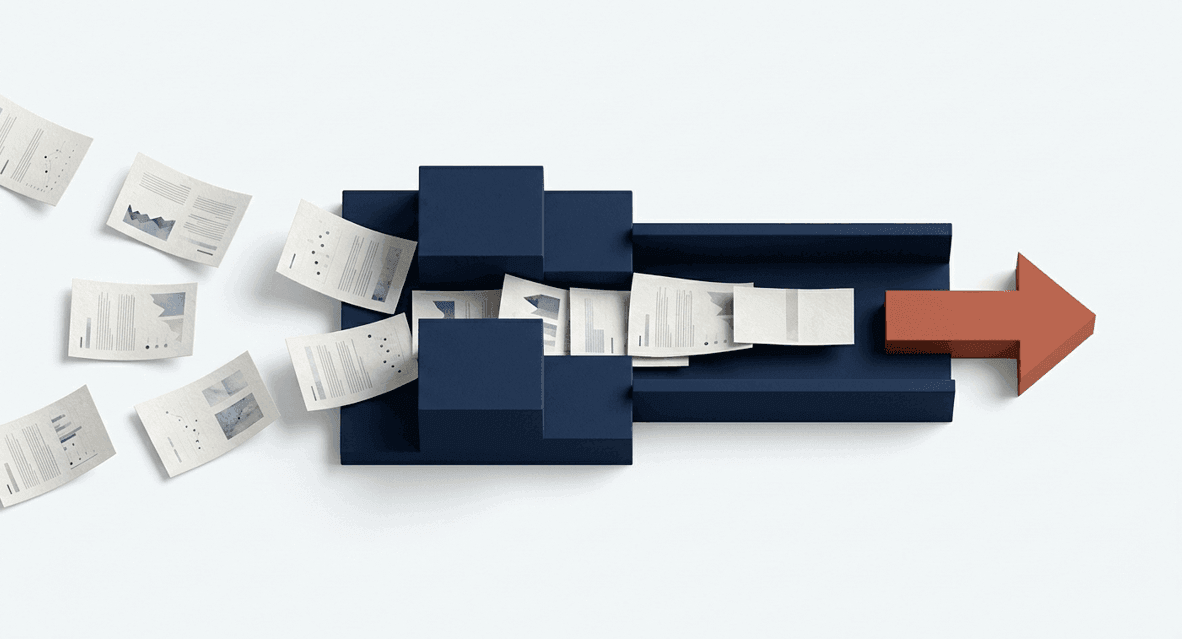
Fieldwork has closed, but the decision is not ready. Researchers still need to check response quality, clean the data, code open-ended answers, analyze results, review themes, create charts, interpret the evidence, and prepare a useful report.
This is why faster data collection is not enough in market research. An AI-powered research workflow can reduce operational work across the project, but researchers remain responsible for research quality, interpretation, recommendations, and the final deliverable.
TL;DR
- The workflow problem: Research loses momentum when briefs, fieldwork, data, analysis, charts, and reports move through disconnected systems and repeated manual handoffs.
- The role of AI: AI can support bounded tasks such as survey programming, cleaning, coding, data exploration, visualization, and first-draft reporting.
- The role of researchers: Human judgment remains essential for methodology, analytical review, interpretation, recommendations, and final business decisions.
Where research workflows lose momentum
Delays often occur after fieldwork or at the transitions between stages. A brief becomes a questionnaire in one system, raw responses are exported to another, open-ended answers are coded elsewhere, and analytical outputs are rebuilt as charts and slides. Each transfer means reformatting files, reconciling versions, and explaining the project context again. We look at the causes in more detail in Why Market Research Workflows Are Still Fragmented in the Age of AI.
The bigger cost is lost continuity. When analytical output is separated from the brief, method, and underlying evidence, researchers must reconstruct how each finding answers the original question. Reducing analysis and reporting bottlenecks therefore requires preserving context between tasks, not simply accelerating one task.
What a connected research process changes
A connected research workflow keeps the study design, evidence, analytical outputs, and reporting context available across six linked stages:
- Planning and study design: Define the business question, method, sample approach, research instrument, and analysis plan.
- Fieldwork: Collect structured and unstructured evidence from respondents.
- Analysis: Clean, code, test, segment, compare, and explore the data as appropriate.
- Visualization: Turn reviewed outputs into charts and other clear representations of the findings.
- Interpretation: Assess what the evidence means in context, including its limitations and alternative explanations.
- Reporting: Connect findings to conclusions, recommendations, and the decision facing stakeholders.
This continuity matters most when a project combines quantitative and qualitative research. Survey data shows patterns and differences; interviews explore why participants answered as they did. When both are analyzed in one environment and brought into consolidated reporting, researchers spend less time reconstructing the project across separate files and can trace each finding back to its evidence.
Where AI can reduce operational work
AI is most useful in a research workflow when it takes on specific, reviewable tasks at each stage rather than producing answers on its own. For a broader view of where AI helps and where it does not, see Where AI Actually Creates Value in Market Research.
Questionnaire development and programming
AI-assisted drafting can provide a starting point for survey questions, response options, and structure. It can also reduce repetitive programming work, provided the researcher reviews wording, logic, measurement choices, and alignment with the study objectives.
Cleaning and quality review
AI can support data cleaning and respondent-quality detection by flagging records that require attention. Researchers still decide which quality rules are appropriate and how exclusions affect the analysis.
Coding and research data analysis
Open-ended survey responses and qualitative material can be organized into proposed codes or themes for review. Plain-language exploration also helps researchers slice quantitative and qualitative project data, investigate trends, and create visualizations while keeping outputs connected to the source evidence.
Charting and first-draft reporting
AI-assisted chart creation and report drafting can reduce repetitive assembly work. These drafts should remain editable: a generated chart may need a different base, label, or comparison, and a draft narrative may need adjustment to reflect context and limitations. The report is only one output of the project; the analyzed data behind it remains the more durable asset, as we argue in Why Research Data Is More Valuable Than the Deck.
Human judgment is the control layer
The defensible path from responses to recommendations is evidence, reviewed analysis, researcher interpretation, and then a recommendation shaped by the business decision. Human oversight is not a final check added after automated processing; it belongs throughout the workflow.
Researchers should approve the methodology, sample approach, questionnaire or discussion structure, and analysis plan. They should also review coding, statistical outputs, themes, charts, conclusions, and recommendations for validity and relevance.
Interpretation requires judgment about context, uncertainty, limitations, and alternative explanations. A statistically significant difference, a recurring interview theme, or an AI-generated summary has meaning only in relation to the method and the question being answered.
Recommendations add commercial context. Researchers determine what the evidence means for the decision, which trade-offs matter, and whether further evidence is needed. As we put it in Why AI Shouldn't Be a Crutch, AI can carry the operational load, but these judgments stay with the researcher.
A practical example: a mixed-method concept study
Consider a hypothetical study designed to decide which product concept should advance and what should be improved before the next stage. An end-to-end research workflow could operate as follows:
- Define the study. The researcher clarifies the business objective, selects a mixed-method design, approves the questionnaire and interview approach, and sets the analysis plan.
- Run quantitative fieldwork. A survey gathers structured feedback on each concept from real respondents, with programming, cleaning, and verbatim coding handled within the workflow.
- Run qualitative fieldwork. AI-moderated interviews with real respondents use contextual follow-up questions to explore the reasoning behind participants' reactions. The researcher reviews the interview approach and the resulting evidence.
- Analyze the combined evidence. The researcher examines survey patterns and qualitative themes, checks relevant segments, and verifies analytical outputs against the underlying data.
- Visualize and draft the report. Editable charts and a first-draft report create a structured starting point. The researcher decides which findings matter and makes sure each conclusion is supported.
- Make the recommendation. The researcher weighs the evidence, study limitations, and business context before recommending which concept to progress, revise, or investigate further.
The value of this process is continuity: each stage contributes evidence and context to the final decision.
How Compeers AI connects the research workflow
This is the problem we built Compeers AI to solve. Compeers is an AI-native all-in-one platform for custom market research with real human respondents, and it runs the whole project in one end-to-end research workflow: planning, fieldwork, analysis, visualization, and reporting. Because the brief, data, and outputs stay in one system, nothing has to be exported, rebuilt, or re-explained between stages.
On the quantitative side, our survey platform handles programming, cleaning and respondent-quality checks, crosstabs, significance testing, and open-ended coding. On the qualitative side, AI Moderator interviews real respondents and asks contextual follow-up questions. Both feed into cross-method analytics and consolidated reporting, and Savant, our AI data analyst, lets researchers explore the combined data in plain language, with every output traceable to the underlying data.
First-draft reports are generated from the analyzed data, so researchers start from a draft instead of building slides by hand. Throughout, a researcher leads the project: AI does not move to the next step until the researcher approves the current one.
Final Thoughts
Research teams should optimize the entire path from the original question to the business recommendation, not fieldwork speed in isolation. Connected tools reduce manual handoffs and repetitive production work, but research quality still depends on sound design, appropriate analysis, and responsible interpretation.
The practical goal is to let AI handle the tasks suited to AI while researchers concentrate on judgment, context, and decisions. Book a demo of Compeers AI to see how this works on a real project.
Frequently Asked Questions
Why is faster data collection not enough in market research?
Fieldwork is only one stage of a research project. Responses still need to be checked, cleaned, coded, analyzed, interpreted, visualized, and translated into a recommendation relevant to the business decision.
Where do manual handoffs slow down research projects?
Manual handoffs create friction when work moves from fieldwork to cleaning, from coding to analysis, and from analytical outputs to charts and reports. Each transition can require reformatting, version reconciliation, context rebuilding, and additional quality checks.
What parts of market research can AI support?
AI can support bounded tasks such as questionnaire drafting and programming, data cleaning, respondent-quality detection, open-ended and thematic coding, data exploration, visualization, and first-draft reporting. Researchers review these outputs before they shape conclusions.
Where is human judgment still needed in AI-assisted research?
Human judgment is required for methodology approval, analytical review, interpretation, assessment of limitations, recommendations, and final decisions. Researchers determine whether an output is valid, relevant, and supported by the evidence.
How do quantitative and qualitative research work together in a connected workflow?
Quantitative research identifies patterns, differences, and relationships, while qualitative research explores the reasons and context behind respondents' answers. In a connected workflow, both are analyzed together and reported against the same business question.
How does Compeers AI support an AI-powered research workflow?
Our survey platform supports quantitative fieldwork and analysis, AI Moderator conducts interviews with real respondents, and Savant supports plain-language exploration of quantitative and qualitative data. Cross-method analytics, consolidated reporting, and researcher approval at every stage connect the process while keeping interpretation and recommendations under human control.
Latest articles
Browse all posts


Custom research, reimagined


